
ROOF-EDGE REPAIR GUIDE
How to Repair Rotted Eaves
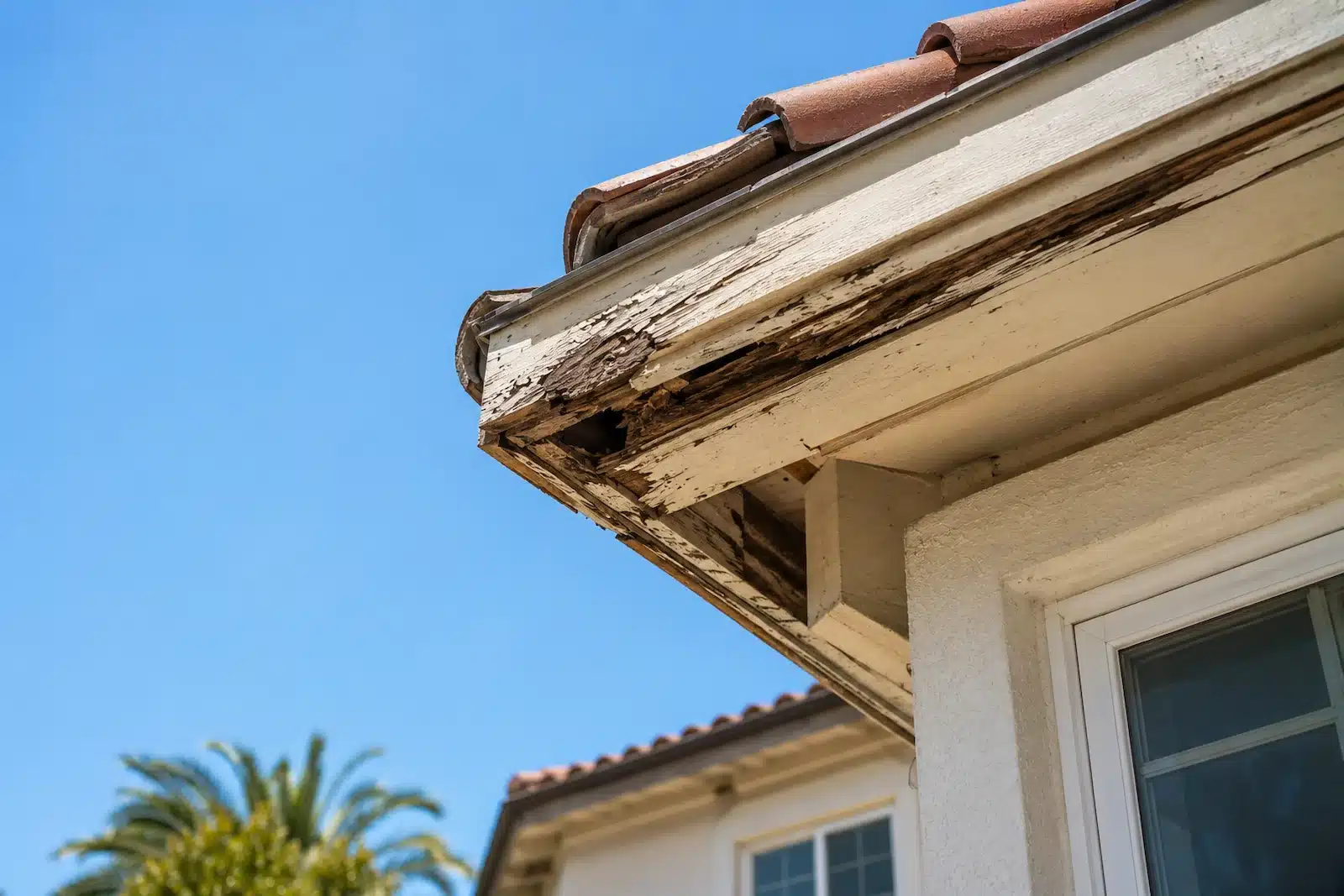
Eaves are the part of the roof that overhangs the wall. Localized deterioration may be repairable after the moisture source is addressed and repair suitability is established. Damage extending into rafters, roof sheathing, or other framing needs further evaluation before choosing repair materials.
THE SHORT ANSWER
Repair Localized Damage—Inspect Framing Before You Rebuild
Fascia, soffit panels, and exposed rafter tails meet at the roof edge, so visible deterioration in one part may continue into another. Correct the moisture source and establish repair suitability before exposing or removing wood. Inspect accessible damage only where safe; uncertain support, connection, or concealed conditions need qualified evaluation.
Localized Roof-Edge Damage
Localized exterior deterioration may be a repair candidate after suitability—including support and concealed-condition questions—has been established.
Connected Components
Inspect the fascia, soffit, rafter tails, sheathing, drip edge, flashing, gutters, and nearby wall surfaces as one connected water-management area.
Framing or Safety Concerns
Movement, significant section loss, uncertain roof support, or deterioration extending into framing requires appropriate evaluation before repair materials are selected.
A repair material does not correct a roof leak, establish structural suitability, or replace safe access planning.
INSPECT THE ASSEMBLY
Trace the Damage Across Fascia, Soffit, and Rafter Tails
The visible opening may not show the full extent of deterioration. Inspect exposed and safely reachable surfaces and connections only where access is safe. Resolve concealed-condition or support questions before further exposure.
Follow the Water Path
Look above and around the damage for failed flashing, damaged roofing, open joints, gutter overflow, or coating failure.
Check Each Component
Inspect accessible fascia, soffit panels, exposed rafter tails, sheathing, and connections. Probe gently only where access is safe. A probe is a screening aid; it does not establish the complete damage extent or structural condition.
Find Suitable Remaining Wood
Remove material only within the evaluated repair scope and current preparation instructions. An intact-looking surface does not establish concealed condition.
Before cutting or scraping, review How Much Rotten Wood Should Be Removed?
REPAIR OR REPLACE
Match the Scope to the Condition of the Roof Edge
A localized surface or profile repair is different from deterioration that affects roof support, drainage, ventilation, or several connected components.
Localized Repair May Be Practical When
The damage is limited, suitable surrounding wood remains, the moisture source can be corrected, and the original profile can be rebuilt without concealing a framing or drainage problem.
Replacement or Further Evaluation May Be Needed When
Deterioration extends into sheathing or rafters, several connected components have failed, the roof edge has moved, or there is uncertainty about support, ventilation, or safe access.
For a broader decision framework, read Repair or Replace Rotten Wood?
MOISTURE AND PREPARATION
Correct the Water Source Before Preparing the Cavity
Repair materials should not be used to cover an active leak, failed flashing, overflowing gutter, trapped moisture, loose fibers, or contaminated surfaces.
Correct the Cause
Address the roof, flashing, drip edge, gutter, joint, drainage, or coating condition that allowed repeated wetting.
Work Within the Evaluated Repair Area
Follow current preparation instructions within the evaluated repair scope. Stop and reassess if deterioration extends beyond that scope or raises support or connection concerns.
Follow Product-Specific Conditions
Cleaning, moisture condition, application depth, temperature, cure, primer, and coating requirements vary. Follow the current instructions for every selected product. Follow the current product label and Technical Documents for preparation, application, cleanup, and safety requirements. Obtain appropriate guidance before disturbing coatings of unknown composition.
Protect Drainage and Ventilation
Keep drip paths, joints, soffit vents, and intended airflow clear throughout preparation and rebuilding.
REBUILD AND FINISH
Restore the Localized Profile Without Hiding Connected Damage
Once repair suitability and preparation requirements are established, rebuild the missing shape while preserving roof-edge drainage, ventilation, and the intended transition between components.
Recreate the Missing Shape
Use a repair material intended for the location and depth to rebuild a localized fascia edge, soffit transition, corner, or exposed rafter detail.
Maintain the Roof-Edge Detail
Match the original reveal and profile without blocking flashing, drip paths, joints, or ventilation openings.
Prime, Seal, and Coat as Directed
After the selected material reaches the required cure condition, shape the surface and use compatible primer, sealant, and exterior coating as applicable.
For material-specific context, read the Epoxy Wood Repair Dough Guide.
FRAMING AND ACCESS SAFETY
Pause When Damage Extends Into Framing or Safe Access Is Uncertain
Choosing a filler or epoxy does not determine whether a roof-edge component can remain in service. Roof access and concealed framing can introduce risks beyond a localized exterior repair.
Rafters and Sheathing
Seek appropriate evaluation when deterioration, splitting, movement, or section loss continues into rafters, rafter tails, roof sheathing, or structural connections.
Roof-Edge Function
Do not cover conditions that affect roof support, water shedding, flashing, gutter attachment, soffit ventilation, or the connection to the wall.
Work at Height
Use appropriate access methods. If the work requires uncertain roof access, tall ladders, fall protection, or framing decisions, use a qualified professional.
Stop and get help when
The roof edge moves, framing condition is uncertain, deterioration is widespread, safe access is not available, or repair suitability cannot be determined safely. Stop before further exposure or removal where hidden framing, load-bearing members, electrical, plumbing, or uncertain structural conditions are involved, and obtain qualified evaluation.
THE WRP REPAIR PROCESS
A Concise Process for a Suitable Localized Eave Repair
The sequence begins with the water source and the condition of connected wood—not with the repair material.
Assess and Correct
Trace the water source, inspect connected components, and determine whether the damaged area is an appropriate localized repair candidate.
Remove and Prepare
Remove unsound material and prepare suitable remaining wood according to the selected repair system's current instructions.
Rebuild and Finish
Restore the missing profile, maintain drainage and ventilation, and apply compatible finishing materials as directed.
COMMON QUESTIONS
Rotted Eaves Repair FAQs
These answers separate localized roof-edge repair from moisture, framing, and access conditions that need additional attention.
Can a rotted eave be repaired without replacing the entire roof edge?
Sometimes. A localized repair may be practical when the moisture source can be corrected, suitable wood remains, and the damage does not require replacement or evaluation of connected framing.
What usually causes eave rot?
Common sources include roof or flashing leaks, gutter overflow, open joints, failed coatings, and drainage conditions that repeatedly wet fascia, soffit, or rafter-tail areas.
What if the fascia, soffit, or rafter tails are also deteriorated?
Inspect the components together because they share the same roof edge and water path. Each damaged component may need its own repair or replacement decision.
Can repair material be applied to damp eave wood?
Do not assume it can. Correct the water source and follow the current moisture-condition, preparation, application, and cure requirements for the specific product selected.
When does eave deterioration need framing evaluation?
Seek appropriate evaluation when damage continues into rafters or sheathing, the roof edge moves, support is uncertain, section loss is significant, or the remaining wood cannot be assessed confidently.
How should a localized eave repair be finished?
After the selected repair material reaches its required cure condition, shape the profile and use compatible primer, sealant, and exterior coating according to current instructions.