
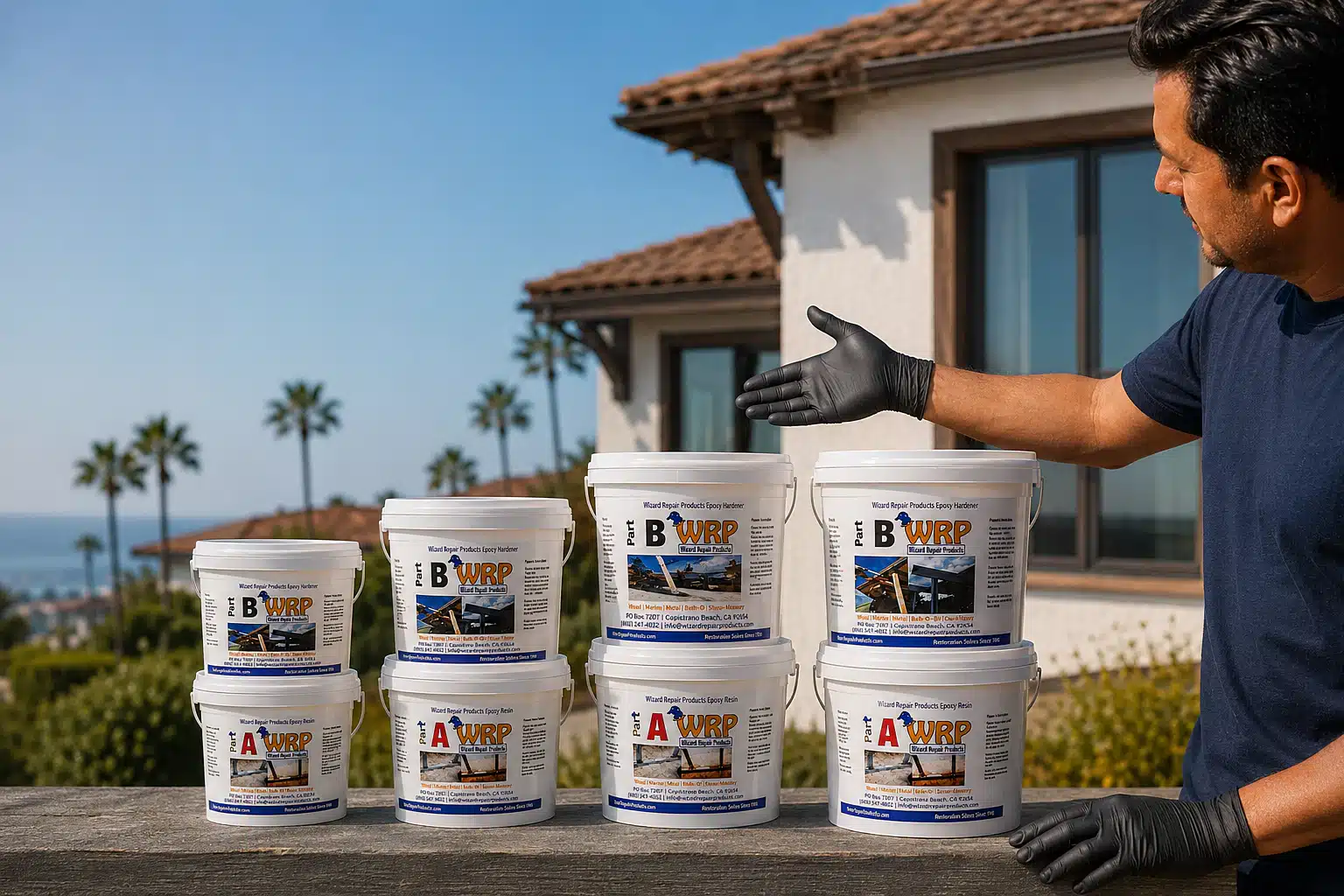
WRP REPAIR KIT GUIDE
Choosing the Right WRP Repair Kit
Kit size is mainly determined by how much damaged or missing wood must be rebuilt. Use the repair area, depth, number of repair locations, and condition of the remaining wood to narrow the choice.
ESTIMATE THE REPAIR
Start With the Size of the Repair
Look at the wood that must be rebuilt, not the overall size of the window, beam, column, or building. Four practical factors determine how quickly repair material is used.
Repair Area
Estimate the combined surface area of the damaged or missing wood.
Repair Depth
Deeper cavities require more Epoxy Dough than shallow repairs covering the same surface area.
Number of Repairs
Add several repair locations together when comparing the project with kit coverage.
Wood Condition
Irregular damage and the amount of weakened wood that remains can change material use.
Coverage is approximate. Material use depends on repair depth and the condition of the damaged area.
APPROXIMATE COVERAGE
WRP Repair Kit Size Guide
Choose the range that most closely matches the combined area you expect to repair. These descriptions are general selection guidance, not exact material guarantees.
Starter
Approx. 0.75 sq ft
One small or localized repair.
View the Starter KitMedium
Approx. 4 sq ft
Several small repairs or one moderate repair.
View the Medium KitLarge
Approx. 8 sq ft
A larger repair area or multiple moderate repairs.
View the Large KitXL
Approx. 16 sq ft
Multiple repairs or a larger restoration project.
View the XL KitXXL
Approx. 32 sq ft
Large multi-area restoration work.
View the XXL KitXXXL
Approx. 80 sq ft
The highest-capacity single kit for extensive repair work.
View the XXXL KitCoverage varies with repair depth and wood condition. Deeper cavities require more Epoxy Dough.
ALLOW FOR THE WHOLE PROJECT
When to Move Up to the Next Kit
Move to the next kit size when the combined repair areas approach the listed coverage, when cavities are deeper than expected, or when the shape of the damage makes the estimate uncertain.
Several Areas Add Up
Count all planned repairs instead of sizing the kit from the first damaged spot.
Depth Uses Material Faster
A small but deep cavity can require more Epoxy Dough than a wider shallow repair.
Irregular Cavities Are Harder to Estimate
Hidden pockets, uneven edges, and additional damage found during preparation can increase material use.
Running out of repair material partway through rebuilding is avoidable. If the estimate falls between sizes, review the project with WRP before ordering.
COMBINE THE REPAIR AREAS
What If You Have Several Repairs?
Estimate the damaged area at every repair location and consider the total project. Three small repairs may use the same amount of material as one larger repair. Include all window sills, trim sections, beam ends, column bases, or other areas you plan to complete with the same kit.
DEPTH CHANGES MATERIAL USE
What If the Damage Is Deep?
Square-foot coverage is a planning guide. It cannot describe the volume of every cavity. Deeper damage requires more Epoxy Dough to replace missing wood, so a repair may need a larger kit even when the visible surface area appears small.
HELP WITH AN UNCERTAIN REPAIR
Not Sure Which Kit You Need?
The WRP Repair Wizard can help narrow the choice based on your repair. It is a product-selection aid, not a structural diagnosis or an exact material calculation.
Include rough measurements, repair depth if known, and photos showing the damaged area and surrounding sound wood.
UNDERSTAND THE MATERIALS
Before You Start the Repair
Review the repair sequence and preparation requirements before ordering or opening materials.
See the Repair Process
Learn how WRP repairs move from inspection and preparation through rebuilding and finishing.
See How WRP WorksPrepare the Wood
Remove unsound material and build the repair against clean, sound wood.
Read the Wood Preparation GuideStrengthen Weakened Wood
Understand where Liquid Wood Consolidant fits in the repair sequence.
Read Wood Consolidant ExplainedRebuild Missing Wood
Learn how Epoxy Dough is mixed, placed, shaped, sanded, and finished.
Read the Epoxy Dough GuideCOMMON KIT-SIZING QUESTIONS
WRP Repair Kit Size Questions
Which factors matter most when choosing a kit?
Consider the combined repair area, cavity depth, number of repair locations, and condition of the remaining wood.
Are the coverage figures guaranteed?
No. Coverage is approximate because repair depth, cavity shape, wood condition, and material loss vary by project.
Should several repairs be measured separately?
Measure them separately if that is easier, then combine the areas when comparing the project with the kit guide.
Why can a deep repair need a larger kit?
Square-foot coverage describes area, while a deep cavity requires more Epoxy Dough to replace the missing wood.
Can this guide determine whether a structural repair is safe?
No. Kit selection does not replace evaluation of structural capacity, connections, temporary support, or repair design. Ask a qualified contractor or engineer when those conditions are uncertain.
CHOOSE WITH CONFIDENCE
Choose a Kit or Ask WRP to Review the Project
Use the coverage guide when the repair is straightforward. Use the Repair Wizard or send photos when depth, several repair locations, or hidden damage make the choice less certain.