
WRP PRODUCTS & MATERIALS
Epoxy Wood Repair Dough Guide
WRP Dough A & B is a two-part epoxy material used to rebuild localized missing wood after deteriorated material has been removed and the repair area prepared. Correct the moisture source and establish repair suitability first. Dough does not resolve hidden damage or establish load-bearing capacity; uncertain support conditions need qualified evaluation before rebuilding.
UNDERSTANDING THE BASICS
Epoxy Wood Repair Dough Guide: What Is It?
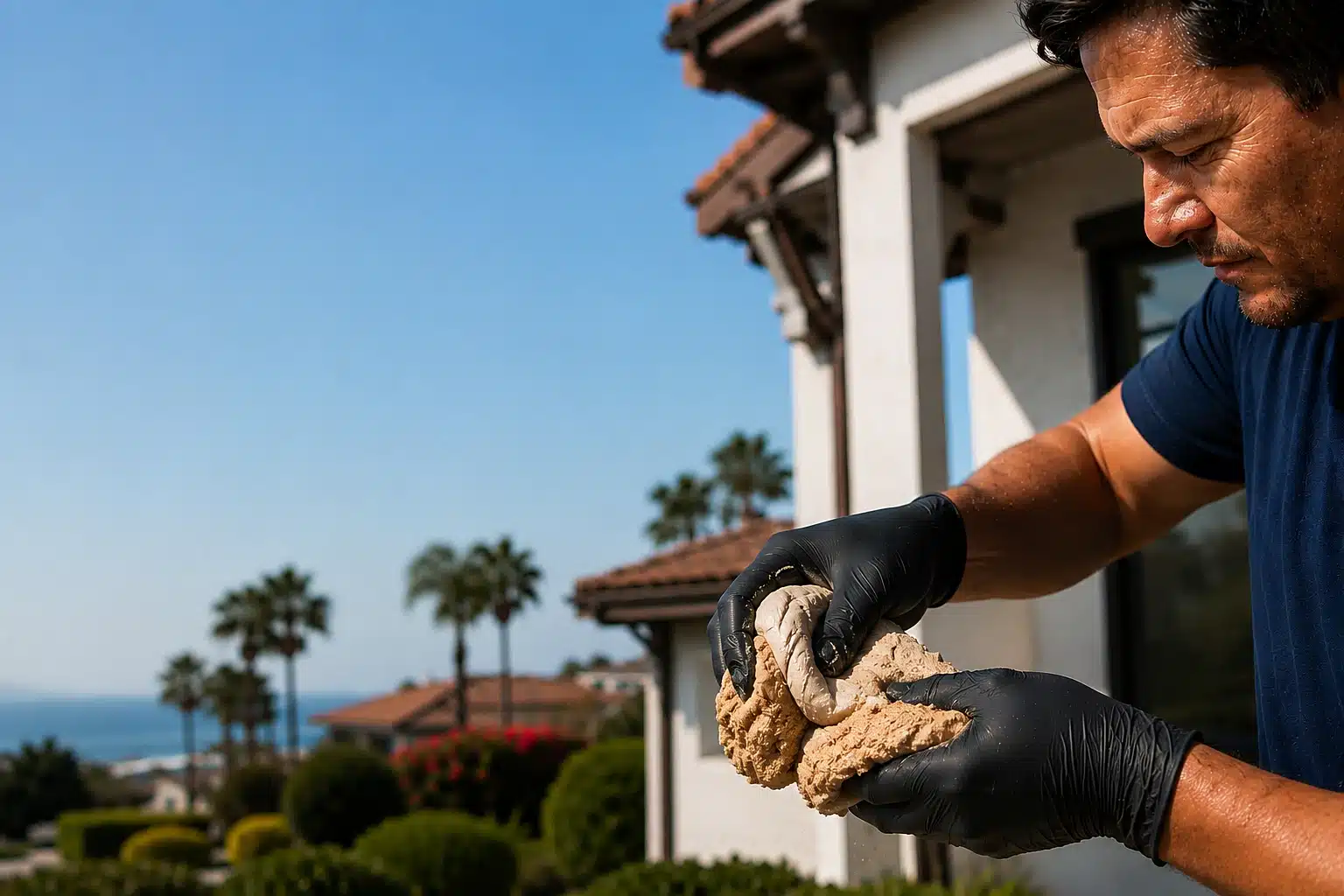
WRP Dough A & B is a two-part epoxy material used to rebuild localized missing wood after preparation. Combine equal parts of Part A and Part B and follow the current product label for mixing, application, curing, and finishing. Current available instructions and safety information are linked from Technical Documents.
Two-Part Epoxy System
Combine equal parts of Part A and Part B and mix according to the current product label.
Rebuilds Missing Wood
Epoxy repair dough is used to restore corners, beam ends, fascia, trim, window components, columns, and other areas where wood has been lost to deterioration.
Shapes Like Wood
Before curing, the dough can be pressed, sculpted, and shaped to recreate the original profile, making it ideal for detailed exterior wood repairs.
Before rebuilding damaged wood, learn Wood Consolidant Explained, review How to Prepare Wood for Repair, or see the complete WRP repair process to understand how each step works together.
HOW IT WORKS
How Epoxy Wood Repair Dough Works
WRP Dough A & B rebuilds localized missing wood after the repair area has been prepared and any applicable Consolidant step completed.
Mix Equal Parts
Combine equal parts of Part A and Part B and mix according to the current product label.
Press Firmly Into the Repair
Apply and shape the mixed material on the prepared repair area, then allow it to cure as directed before finishing.
Shape the Repair
Apply and shape the mixed material on the prepared repair area according to the current product label.
Allow It to Cure
After curing, the repaired area can be sanded, drilled, routed, primed, painted, or finished as part of the complete WRP repair system.
Application to Prepared Wood
Apply mixed Dough to the prepared repair area according to current product instructions.
Part of a Complete Repair System
Wood Consolidant is used on prepared deteriorated wood where applicable before Dough rebuilds missing areas. WRP Topping is a finishing option for minor surface imperfections after rebuilding. Follow the current product instructions for the steps appropriate to the repair.
COMMON APPLICATIONS
Epoxy Wood Repair Dough Guide to Common Applications
The examples below describe localized exterior profiles, not automatic repair approval. Establish repair suitability and resolve support or hidden-condition concerns before selecting Dough.
Fascia Boards
Restore deteriorated roof edges, rafter tails, and fascia boards without replacing long sections of otherwise sound wood.
Windows & Doors
Rebuild damaged window sills, jambs, trim, door frames, and decorative details while preserving the original woodwork.
Columns & Beam Ends
Localized missing exterior profiles may be rebuilt only after repair suitability is established. Damage involving beam ends, columns, framing, or connections may require qualified evaluation.
Trim & Decorative Wood
Repair exterior trim, moldings, brackets, soffits, corbels, decorative millwork, and custom architectural details.
Ideal for Exterior Repairs
Consider Dough for localized missing wood only after deciding whether repair, replacement, or further evaluation is appropriate.
Not for Loose, Unprepared Wood
Always remove unsound wood and properly prepare the repair area before rebuilding. Learn How to Prepare Wood for Repair and Wood Consolidant Explained before beginning your repair.
See real repairs in our Before & After Gallery, browse the complete WRP Repair Process, or explore WRP Products to find the right materials for your project.
KNOW WHEN TO REBUILD
When to Use Epoxy Wood Repair Dough
Use Dough to rebuild localized missing wood after deteriorated material has been removed and the repair area prepared. Repair suitability must be established before rebuilding.
Missing Wood
Consider Dough when localized wood is missing and the area has been confirmed suitable for repair.
Recreating Profiles
Restore corners, edges, trim details, decorative molding, and architectural features that require shaping before curing.
Deep Repairs
Repair depth and cavity shape affect material use. Larger or concealed damage may require further evaluation before selecting materials. See Choosing the Right WRP Repair Kit for material-quantity planning.
When Not to Use It
Epoxy repair dough should not be applied over loose, wet, or contaminated wood. Proper preparation is essential for a successful repair.
Best Results
Prepare the repair area, complete any applicable Wood Consolidant step, rebuild localized missing wood with Dough, and use Topping where surface refinement is needed.
Learn How to Prepare Wood for Repair, explore Wood Consolidant Explained, follow the complete WRP Repair Process, or browse the WRP Product Line to choose the right materials for your repair.
FINISHING THE REPAIR
Finishing Epoxy Wood Repair Dough
After curing, the repair can be sanded, drilled, routed, carved, primed, and painted as appropriate. Follow current product instructions for curing and finishing requirements.
Sand to Shape
Once cured, the repair can be sanded to create smooth transitions and accurately match the surrounding wood profile.
Drill and Route
Properly cured repairs can be drilled or routed when required for hardware installation or profile restoration.
Refine the Surface
Use WRP Topping where minor surface refinement is needed after rebuilding. Follow current product instructions before priming.
Prime and Paint
Complete the appropriate primer and paint steps according to current product and coating instructions.
Continue with When to Use WRP Topping Compound, review How WRP Works, browse the WRP Product Line, or return to the WRP Learning Center for more wood repair guides.
AVOID COMMON MISTAKES
Common Mistakes When Using Epoxy Wood Repair Dough
Preparation and application should follow the current WRP product instructions. Avoid applying Dough to unsuitable surfaces or finishing before the required cure.
Incomplete Mixing
Combine equal parts of Part A and Part B and mix according to the current product label.
Skipping Preparation
Epoxy repair dough should never be applied over loose, deteriorated wood. Follow How to Prepare Wood for Repair before rebuilding.
Ignoring Moisture
Always correct the source of moisture before repairing wood. Trapping active moisture can shorten the life of any repair. For additional technical background on moisture-related wood deterioration, review the USDA Forest Service Wood Handbook chapter on biodeterioration.
Rushing the Cure
Allow the epoxy to fully cure before sanding, routing, priming, or painting. Premature finishing can damage the repair.
Use Wood Consolidant Where Applicable
When applicable, use Wood Consolidant on prepared deteriorated wood before rebuilding localized missing areas with Dough.
Follow the Complete WRP System
Use the preparation, rebuilding, and finishing steps appropriate to the repair and specified by current product instructions.
Learn more about Wood Consolidant Explained, review How to Prepare Wood for Repair, see How WRP Works, browse the WRP Product Line, or return to the WRP Learning Center.
COMPLETE WRP REPAIR PROCESS
Prepare → Rebuild → Finish
Plan the repair sequence before applying materials. Wood Consolidant, Dough, and Topping have different preparation, rebuilding, and surface-refinement roles.
1. Prepare
Remove deteriorated material, correct the moisture source, and complete any applicable Wood Consolidant step.
2. Rebuild
Use WRP Dough A & B for localized missing wood where the area is suitable for repair.
3. Finish
Shape and finish the repair according to current product instructions. Use WRP Topping where minor surface refinement is needed.
FREQUENTLY ASKED QUESTIONS
Frequently Asked Questions About Epoxy Wood Repair Dough
What is epoxy wood repair dough used for?
Epoxy wood repair dough is used to rebuild missing or damaged wood after loose material has been removed and the remaining wood has been properly prepared. It restores corners, beam ends, trim, fascia boards, columns, window components, and many other exterior wood profiles.
Does epoxy wood repair dough replace wood filler?
Epoxy repair dough is designed for rebuilding missing wood, while products such as WRP Topping Compound are used to refine the surface before priming and painting.
Can epoxy wood repair dough be sanded?
Yes. After the epoxy has completely cured, it can be sanded, shaped, drilled, routed, primed, and painted to match the surrounding wood.
Should wood consolidant be used first?
When appropriate, remaining weakened wood should first be treated with wood consolidant before rebuilding the missing section with epoxy repair dough.
Can epoxy wood repair dough be used outdoors?
WRP Dough A & B may be used for suitable localized exterior wood repairs. Follow current product instructions for preparation, application, curing, and finishing.
How long does epoxy wood repair dough last?
This guide does not establish a service-life guarantee. Address the moisture source and follow current preparation, application, and finishing instructions.
Where can I learn the complete repair process?
Visit How WRP Works for the complete step-by-step repair process, or browse the WRP Learning Center for additional repair guides and product education.
CONTINUE LEARNING
Ready to Plan a Localized Wood Repair?
Once the moisture source is addressed and the area is confirmed suitable for localized repair, compare kit coverage or use the Repair Wizard to plan the materials needed.
Understand Wood Consolidant
Learn where Wood Consolidant may fit when preparing deteriorated wood before rebuilding missing areas with Dough.
See the Complete WRP Process
Review every stage from preparation and consolidation through rebuilding, shaping, priming, and painting.
Refine the Finished Repair
Learn when WRP Topping may be used to smooth minor imperfections before priming and painting.
Continue reading Can Rotten Wood Be Repaired?, Repair or Replace Rotten Wood?, How Much Rotten Wood Should Be Removed?, and How to Prepare Wood for Repair. For project or product questions, contact WRP.