
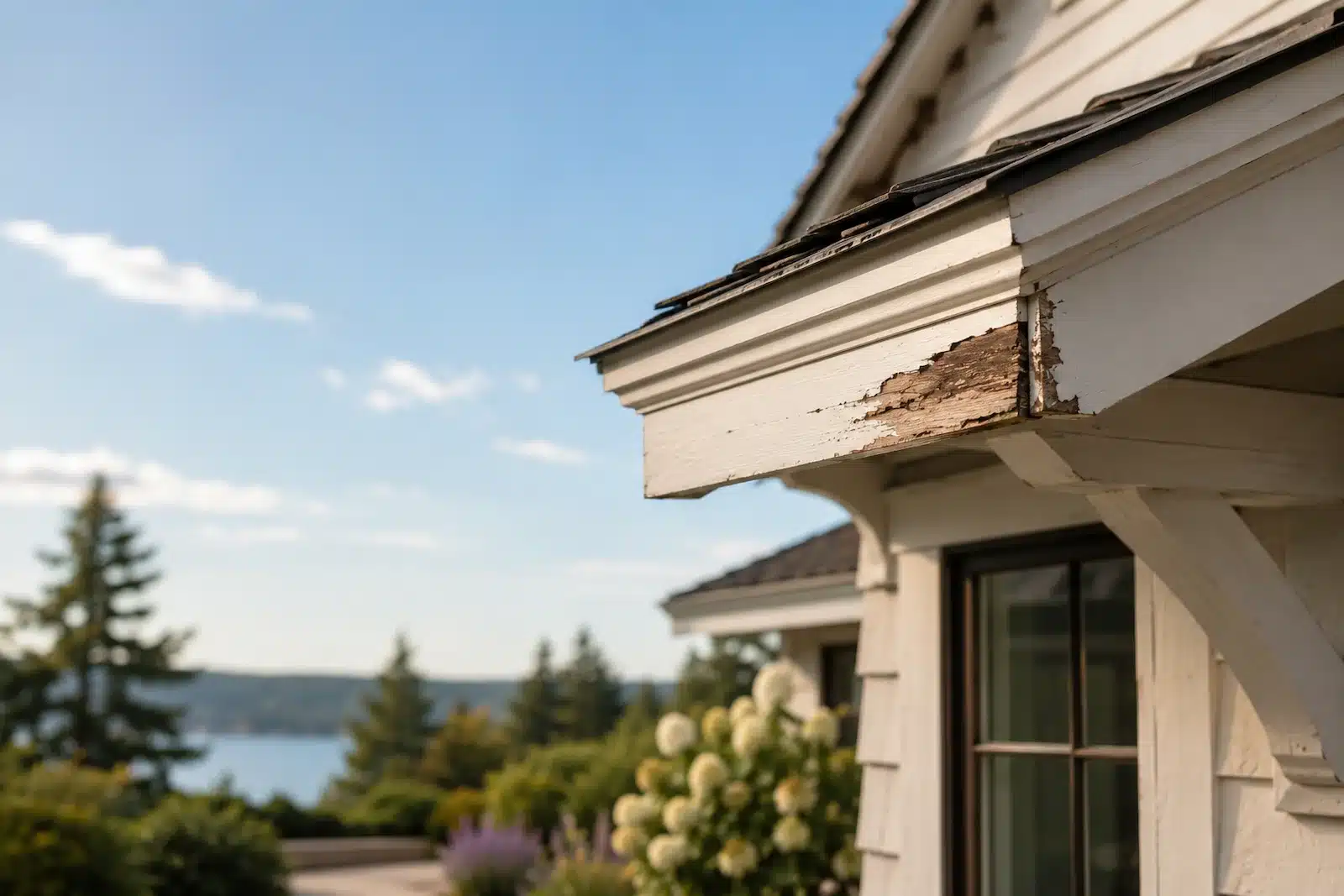
PLANNING A WOOD REPAIR
Can Rotten Wood Be Repaired?
Can rotten wood be repaired? Learn when deteriorated wood can be restored, what makes a repair practical, and when replacement or professional evaluation may be the safer choice.
THE SHORT ANSWER
Yes, Rotten Wood Can Often Be Repaired
Can rotten wood be repaired? Yes. Not every deteriorated board needs to be replaced. Many localized areas can be restored when enough sound wood remains, the moisture source is corrected, and the damaged material is properly removed, strengthened, and rebuilt.
Localized Damage Is Often Repairable
Fascia boards, window sills, trim, porch columns, beam ends, stairs, and other exterior wood components can often be repaired without replacing the entire piece.
Sound Wood Must Remain
A durable repair needs firm surrounding wood that can support the restored section. The visible opening may be large, but the condition of the remaining wood matters most.
The Moisture Source Must Be Fixed
Leaks, failed caulk, poor drainage, overflowing gutters, or trapped moisture must be corrected before the wood is restored. For additional background, review the USDA Forest Service research on moisture and wood decay.
Before deciding on a repair, learn how to identify rotten wood, review what causes wood rot, or browse real WRP repair examples.
GOOD REPAIR CANDIDATES
Can Rotten Wood Be Repaired Successfully?
Repair is usually most practical when deterioration is limited to one area and the surrounding component remains stable. The goal is to preserve the original wood while rebuilding only what has been lost.
The Damage Is Localized
A small or moderate section of rot surrounded by firm wood is often a strong repair candidate, even when some of the original profile is missing.
The Surrounding Wood Is Firm
The remaining wood should resist light probing and remain securely attached to the rest of the component.
The Original Shape Can Be Rebuilt
Missing corners, edges, profiles, and decorative details can often be recreated after all loose deterioration has been removed.
Replacement Would Be Disruptive
Repair may preserve trim details, avoid demolition, and reduce damage to surrounding siding, roofing, masonry, or finishes.
Original Materials Are Worth Preserving
Older homes may contain custom profiles or large wood members that are difficult and expensive to duplicate.
The Area Can Be Kept Dry
Once repaired, the wood must be protected with proper drainage, sealed joints, primer, paint, and routine maintenance.
See where these conditions occur in common wood rot locations, or review the complete WRP repair process.
KNOW THE LIMITS
When Replacement or Professional Evaluation May Be Needed
Not every deteriorated component should be repaired in place. Widespread loss of strength, unstable framing, or unresolved moisture can make reinforcement or replacement the safer choice.
Most of the Wood Has Lost Strength
If deterioration extends through most of the component, too little sound material may remain to support a durable repair.
The Component Is Load-Bearing
Beams, joists, posts, stair members, and other structural components may require evaluation when decay affects their ability to carry loads safely.
Connections Are Unstable
Loose fasteners, failed joints, severe movement, or damage at critical connections may require reinforcement or replacement.
Moisture Cannot Be Controlled
A repair is unlikely to last when the wood will continue to experience leaks, standing water, ground contact, or trapped moisture.
Damage Extends Into Hidden Framing
Deterioration behind walls, roofing, trim, or other building components may require opening the assembly for a complete evaluation.
Safety Is Uncertain
When the condition involves structural loads, fall hazards, or public safety, seek qualified professional guidance before proceeding.
This article provides general educational guidance. Structural conditions should always be evaluated individually.
PREPARATION MATTERS
Why Simply Filling Over Rotten Wood Does Not Work
A durable restoration begins below the visible surface. Covering soft or loose wood with filler does not restore the damaged fibers and can trap an unstable foundation beneath the repair.
Soft Fibers Cannot Support the Repair
Loose, spongy, or crumbling wood can move and break away, causing material placed over it to crack or separate.
Moisture Can Remain Trapped
Filling over damp or decayed material can seal moisture inside the wood and allow deterioration to continue.
The Visible Damage May Be Incomplete
Rot often extends beyond the obvious opening. The surrounding wood should be inspected before the repair area is finalized.
Learn how much rotten wood should be removed and how to prepare the remaining wood before restoration begins.
THE RESTORATION PROCESS
How the WRP Repair Process Restores Damaged Wood
A complete repair does more than fill an opening. It prepares the wood, strengthens the remaining fibers, rebuilds missing material, and restores the original shape before finishing.
Prepare the Wood
Correct the moisture source, remove loose deterioration, clean the area, and prepare the remaining wood for treatment.
Strengthen and Rebuild
Consolidate weakened fibers and rebuild missing areas with WRP repair materials suited to the size and depth of the damage.
Shape and Finish
Restore the original profile, recreate the surrounding texture, and apply the appropriate primer and finish coating.
WHY REPAIR IN PLACE?
Can Rotten Wood Be Repaired Instead of Replaced?
When the component is a good repair candidate, restoration can preserve the original material while avoiding unnecessary demolition, custom carpentry, and disruption to surrounding finishes.
Preserve Original Details
Repair can retain custom profiles, older materials, and architectural features that are difficult to replace accurately.
Reduce Demolition
Localized restoration can avoid removing roofing, siding, masonry, trim, or other components attached to the damaged wood.
Limit Project Disruption
Repairing in place can reduce labor, debris, schedule delays, and the amount of surrounding work that must be refinished.
Keep More Existing Material
Restoration removes only the unsound portion instead of discarding an entire component that is mostly serviceable.
Rebuild Difficult Shapes
Corners, curves, moldings, beam ends, and other detailed profiles can be shaped to match the original wood.
Create a Paint-Ready Surface
After curing and shaping, the restored area can be sanded, primed, and painted to blend with the surrounding wood.
For a direct comparison, continue to Repair or Replace Rotten Wood?
NEXT STEPS
What to Do When You Find Repairable Wood Rot
Do not begin by covering the surface. First stop the moisture, determine how far the damage extends, and prepare the remaining wood for a complete restoration.
Stop the Moisture
Repair leaks, maintain gutters, replace failed sealant, and correct drainage or ground-contact problems.
Remove Unsound Wood
Remove soft, brittle, crumbling, or detached material until the remaining wood is firm enough to support restoration.
Prepare, Strengthen, and Rebuild
Clean and treat the remaining wood, strengthen weakened fibers, rebuild the missing profile, and finish the repaired area.
Review how much rotten wood should be removed and how to prepare wood for repair before applying restoration materials.
COMMON QUESTIONS
Frequently Asked Questions About Repairing Rotten Wood
These answers cover the basics. Review how the WRP system works, or visit the WRP Learning Center for more detailed guidance.
Can severely rotten wood be repaired?
Sometimes. The decision depends on how much sound wood remains, whether the component is stable, and whether the moisture source can be corrected. Widespread structural damage may require reinforcement or replacement.
Does all rotten wood need to be removed?
Loose, soft, brittle, crumbling, or detached wood should be removed. The goal is to reach material that is firm enough to support the repair—not to remove healthy wood unnecessarily.
Can wood filler be applied directly over rot?
No. Filling over unsound wood does not restore the weakened fibers and can lead to separation or continued deterioration beneath the surface.
Can repaired wood be sanded and painted?
Yes. After the repair material cures, the surface can be shaped, sanded, primed, and painted to match the surrounding wood.
How long can a proper wood repair last?
A properly prepared repair is intended to provide a durable, long-term restoration. Its performance also depends on correcting moisture problems and maintaining the finished coating system.
Is repair always less expensive than replacement?
Not always, but localized repair can reduce demolition, custom carpentry, material replacement, and refinishing of nearby surfaces. Every project should be evaluated individually.
Which WRP kit should I use?
Kit size depends on the number, depth, and overall size of the repairs. Browse WRP wood repair products or contact WRP for help selecting materials.
CONTINUE PLANNING YOUR REPAIR
Take the Next Step With Your Wood Repair
Now that you know the answer to “Can rotten wood be repaired?”, compare repair and replacement, learn how much deteriorated material should be removed, and prepare the remaining wood correctly.
Repair or Replace Rotten Wood?
Compare the practical factors that help determine whether restoration or replacement is the better choice.
How Much Rotten Wood Should Be Removed?
Learn how to identify unsound material and determine when the remaining wood is ready for restoration.
How to Prepare Wood for Repair
Follow the preparation steps that create a clean, stable foundation for consolidant and epoxy repair materials.