
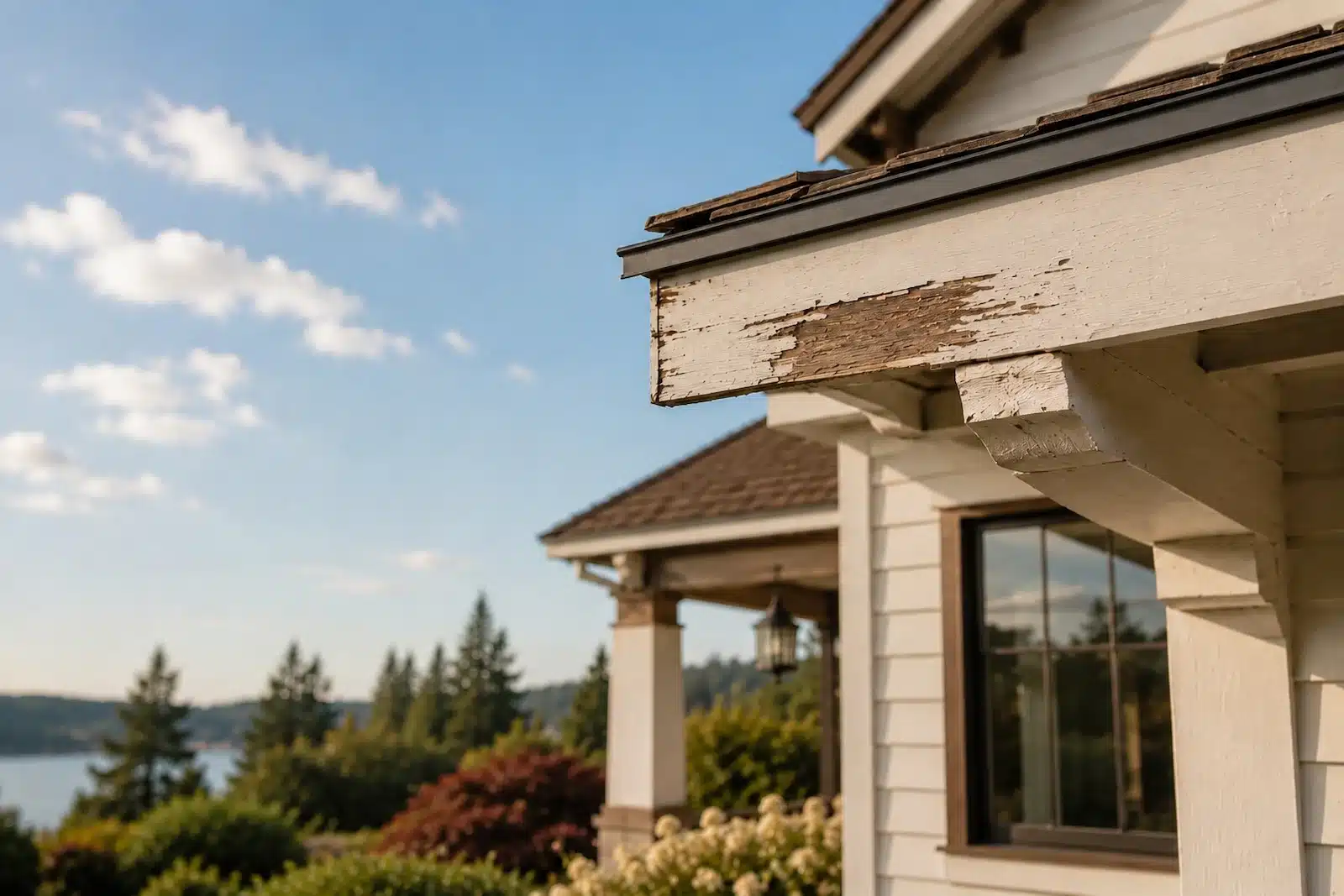
PLANNING A WOOD REPAIR
Repair or Replace Rotten Wood?
Address the moisture source and establish whether localized repair, replacement, or further evaluation is appropriate before removing wood or choosing materials. Accessible inspection, firmness, and apparent attachment do not establish concealed condition or load-bearing suitability. Uncertain framing, supports, or connections need qualified evaluation.
THE CORE DECISION
How to Decide Whether to Repair or Replace Rotten Wood
Localized repair may remain a candidate after moisture correction and a repair-suitability decision. Widespread deterioration, uncertain supports or connections, and inaccessible damage may require replacement planning or further evaluation. Appearance, firmness, and visible cavity size alone do not determine the approach. For additional technical background on wood decay and deterioration, review the USDA Forest Service Wood Handbook chapter on biodeterioration.
Repair Makes Sense When
Localized exterior deterioration may be a repair candidate when moisture is addressed and repair suitability—including support and concealed-condition questions—has been established.
Replacement Makes Sense When
Widespread deterioration or uncertain supports, connections, or safety conditions may require replacement or qualified evaluation before a repair approach is selected.
Start by reviewing when rotten wood can be repaired and how to recognize accessible signs of wood deterioration.
GOOD REPAIR CANDIDATES
When to Repair Rotten Wood
When deciding whether to repair or replace rotten wood, repairing in place is often practical when the deterioration is limited and replacing the entire component would create more work, cost, or disruption than restoring the damaged area.
The Damage Is Localized
Localized deterioration may be considered for repair after suitability has been established; visible size and firmness alone are insufficient.
Original Details Matter
Custom trim, historic profiles, large timbers, and decorative features may be easier to preserve than reproduce.
Replacement Would Disturb Nearby Materials
Repair may avoid removing adjacent roofing, siding, stucco, flashing, trim, masonry, or finished surfaces.
Time and Labor Can Be Reduced
Compare demolition, debris, carpentry, access, and refinishing requirements for both suitable options.
The Surface Can Be Refinished
After curing and shaping, a repaired area can be sanded, primed, and painted to blend with surrounding wood.
Moisture Can Be Controlled
Address leaks, failed sealants, drainage problems, and trapped moisture before rebuilding.
KNOW WHEN TO REPLACE
When to Replace Rotten Wood
Widespread deterioration may favor replacement planning. Uncertain structural, support, or concealed conditions require qualified evaluation before choosing either approach.
Most of the Component Is Damaged
If decay affects most of the board, post, beam, or trim piece, replacement may be more practical than rebuilding nearly all of it.
Structural Capacity Is Uncertain
Load-bearing members, stairs, railings, and critical framing should be evaluated when decay affects strength or stability.
Connections Have Failed
Loose fasteners, failed joints, severe movement, or damage at critical attachment points need qualified evaluation before the repair or replacement approach is chosen.
Hidden Damage Is Extensive
Concealed deterioration needs an appropriate evaluation plan before the assembly is opened or affected framing is removed.
Moisture Will Continue
Repair should be delayed when ongoing leaks, ground contact, standing water, or trapped moisture cannot be corrected.
Safety Is a Concern
Replacement or professional evaluation is appropriate when the condition could affect occupants, workers, or the public.
PRACTICAL COMPARISON
Repair or Replace Rotten Wood: Cost, Time, and Disruption
When you repair or replace rotten wood, the visible damage is only one part of the decision. Consider the labor, surrounding finishes, access, material availability, and long-term performance of each option.
Repairing in Place
Repair may reduce demolition, preserve original materials, limit refinishing, and avoid disturbing nearby roofing, siding, stucco, trim, or masonry.
Replacing the Component
Replacement may be more straightforward when damage is widespread, the profile is easy to reproduce, or the component can be removed without major disruption.
The lowest initial price is not always the best long-term choice. Compare the complete scope of work, not only the damaged opening.
EVALUATE THE PROJECT
Repair or Replace Rotten Wood Checklist
Use these questions to decide whether to repair or replace rotten wood before selecting materials or beginning demolition.
What May Remain After Evaluation?
Inspect accessible deterioration only where safe. Probing is a screening observation, not confirmation of concealed condition or repair suitability.
Is the Component Stable?
Visible movement, loose connections, or sagging warrant qualified evaluation before exposure, removal, or rebuilding.
Can the Moisture Source Be Fixed?
Identify leaks, failed sealants, poor drainage, or contact with wet surfaces before repair begins.
Is the Damage Accessible?
The deteriorated area must be reachable so loose wood can be removed and the remaining wood prepared.
Would Replacement Damage Nearby Materials?
Consider whether removing the component would disturb roofing, siding, stucco, trim, or finished surfaces.
Is Professional Evaluation Needed?
Seek qualified guidance when structural loads, safety, or hidden framing are involved.
Learn how much deteriorated wood should be removed within the evaluated repair scope, and when to stop and reassess.
REAL-WORLD EXAMPLES
Common Repair or Replace Rotten Wood Scenarios
The same amount of visible damage can lead to different decisions depending on the component, access, surrounding materials, and condition of the remaining wood.
Localized Fascia Damage
Localized fascia deterioration may be a repair candidate after moisture and repair-suitability questions are resolved; firmness alone is insufficient.
Window Sill or Trim Rot
Repair may preserve the original profile and avoid disturbing the window, siding, and interior finishes.
Porch Column Base Damage
Porch-column base damage may involve support or concealed deterioration. Obtain qualified evaluation where those conditions are uncertain before removing wood or choosing materials.
Beam-End Decay
Beam-end deterioration requires resolution of support, connection, and concealed-condition concerns before repair materials are selected.
Extensively Rotted Deck Board
Replacement is often simpler when the full board is accessible and most of its length has deteriorated.
Hidden Framing Damage
Deterioration beyond visible trim needs an appropriate evaluation plan before the assembly is opened or framing is removed.
Browse real WRP before-and-after repairs to see different types of wood restored in place.
NEXT STEPS
What to Do After You Decide to Repair
Establish repair suitability before preparation and rebuilding. Follow the current product label and Technical Documents for preparation, application, cleanup, and safety requirements. Obtain appropriate guidance before disturbing coatings of unknown composition.
Correct the Moisture Source
Repair leaks, improve drainage, replace failed caulk, and meet current preparation requirements. Address recurring moisture when planning either repair or replacement. Obtain appropriate help where correction is beyond safe access or the repair’s scope.
Remove Unsound Material
Remove deteriorated material only within the evaluated repair scope and current preparation instructions. Stop and reassess if damage extends beyond that scope.
Prepare and Rebuild
Complete the applicable preparation requirements after repair suitability is established. Wood Consolidant is used on prepared deteriorated wood where applicable; Dough rebuilds localized missing wood; Topping is optional surface refinement.
COMMON QUESTIONS
Frequently Asked Questions About Repairing or Replacing Rotten Wood
These answers provide general guidance. Structural or safety-related conditions should be evaluated individually.
Is it cheaper to repair or replace rotten wood?
Localized repair can be less disruptive and may reduce labor, demolition, custom carpentry, and refinishing. Replacement may be more practical when damage is widespread or the component is easy to remove and reproduce.
How much sound wood must remain for a repair?
There is no universal amount or firmness test that establishes repair suitability. Resolve support and concealed-condition questions before deciding what may remain. There is no single percentage that applies to every component, because size, shape, loading, access, and connections all matter.
Should structural rotten wood always be replaced?
Conditions involving load-bearing members or instability require qualified evaluation before removal or material selection. The appropriate repair or replacement approach depends on that evaluation.
Can only part of a board be repaired?
A localized area may be rebuilt after repair suitability and removal scope have been established.
Does a large cavity automatically require replacement?
Cavity size alone does not determine replacement. Repair suitability also depends on concealed condition, supports, connections, access, and moisture.
Can repaired wood be drilled, sanded, and painted?
Follow the current instructions for the selected material’s curing, shaping, drilling, sanding, priming, and painting requirements.
Where can I see examples of repaired wood?
Browse WRP before-and-after projects and review the complete repair process.
CONTINUE PLANNING
Prepare for a Successful Wood Repair
After choosing repair, the next steps are determining how much deteriorated wood to remove and preparing the remaining material for restoration.
Can Rotten Wood Be Repaired?
Review the conditions that make localized wood damage a good candidate for restoration.
How Much Rotten Wood Should Be Removed?
Learn why firmness alone is insufficient and when to stop and reassess the evaluated removal scope.
How to Prepare Wood for Repair
Review moisture correction, repair suitability, and applicable preparation instructions before rebuilding.
Ready to Plan a Localized Wood Repair?
Once the moisture source is addressed and the area is confirmed suitable for localized repair, compare kit options or use the Repair Wizard to plan the materials needed.
For material planning, review Choosing the Right WRP Repair Kit. Explore related guidance in the WRP Learning Center.