
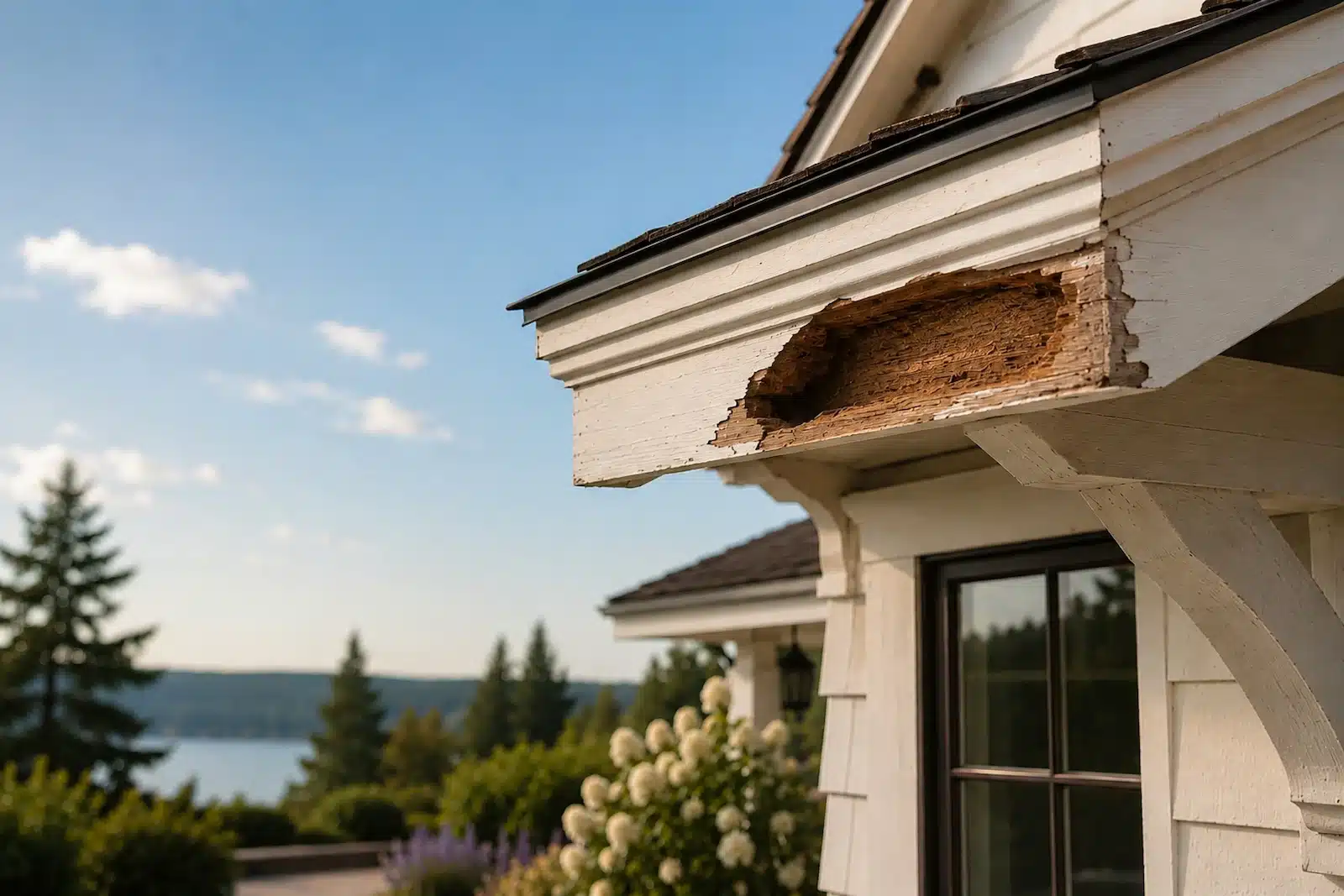
PLANNING A WOOD REPAIR
How Much Rotten Wood Should Be Removed?
How much rotten wood should be removed? Correct the moisture source and establish repair suitability before removing wood. Remove deteriorated material only within the evaluated repair area and according to current preparation instructions. Firmness or apparent attachment does not establish concealed condition or load-bearing suitability. Uncertain framing, supports, or connections need qualified evaluation before removal. The correct stopping point depends on condition—not color alone or an arbitrary cavity shape.
THE SHORT ANSWER
Remove Deteriorated Material Within the Evaluated Repair
There is no universal removal depth or firmness test that establishes repair suitability. Follow the evaluated repair scope and current preparation instructions, and reassess if deterioration extends beyond that scope. The goal is not to create the largest cavity possible. It is to remove soft, brittle, crumbling, or detached wood while preserving healthy wood.
Remove Loose Material
Loose or crumbling material requires attention within the evaluated repair. Follow current preparation instructions rather than using pressure alone to determine removal scope.
Confirm What May Remain
Whether remaining wood is suitable to retain must be established before treatment; apparent firmness and attachment alone are not sufficient.
Inspect Beyond the Visible Opening
Deterioration may extend beyond visible edges. Inspect accessible areas only where safe; probing is a screening aid and does not establish concealed damage extent or repair readiness.
Before removing material, review how to identify rotten wood and whether repair or replacement is appropriate.
IDENTIFY UNSOUND MATERIAL
How to Tell Which Wood Should Be Removed
The condition of the wood matters more than its color alone. Accessible visual inspection and gentle pressure may reveal deterioration, but do not establish whether remaining material is suitable to retain or carry loads.
Soft or Spongy Wood
Easy compression can indicate deterioration. Establish repair suitability and removal scope before removing material.
Brittle or Crumbling Fibers
Wood that breaks into fragments, powders, or separates into loose fibers cannot provide a reliable repair surface.
Detached or Delaminated Wood
Separated or moving material warrants reassessment. Remove material only within the evaluated repair scope.
Persistently Damp Wood
Wet wood should not be sealed inside a repair. The moisture source must be corrected and the area allowed to dry.
Wood That Holds Fasteners Poorly
Uncertain fastener or connection conditions need qualified evaluation before further exposure or removal.
Firmness Alone Is Not Enough
Resistance to light probing does not establish concealed condition or load-bearing suitability. Confirm whether the wood may remain before treatment.
FOLLOW THE DECAY
How Far Should You Remove Rotten Wood?
Remove deteriorated material within the evaluated repair. Stop and reassess if damage extends beyond the expected area or raises support, connection, or concealed-condition concerns. The shape should follow the actual path of the decay, not an arbitrary square or rectangle.
Start at the Weakest Area
Begin removal only after repair suitability and scope have been established, using current preparation instructions.
Inspect Accessible Edges Safely
Inspect accessible edges where access is safe; do not enlarge the opening to investigate unresolved concealed or support conditions. Hidden softness may remain behind a firm-looking surface.
Follow Natural Grain and Damage
Let the cavity follow the real deterioration rather than making perfectly straight machine-cut edges.
Avoid Removing Healthy Wood
Do not remove additional material solely to enlarge or regularize the cavity. Reassess whenever the evaluated repair scope is exceeded.
Resolve Connection Concerns
Uncertain joints, fasteners, brackets or beam pockets need qualified evaluation before further removal.
Stop if Stability Is Uncertain
Load-bearing or unstable components may require professional evaluation before additional material is removed.
AVOID THESE PROBLEMS
Common Mistakes When Removing Rotten Wood
Removing too little can leave an unstable foundation. Removing too much can create unnecessary work and reduce the amount of original material available to support the repair.
Follow the current product label and Technical Documents for preparation, application, cleanup and safety requirements. Review appropriate safety guidance before disturbing coatings of unknown composition, and use protective equipment and dust controls appropriate to the products, tools and existing coatings.
Stopping at the Painted Edge
Paint may conceal deterioration. Inspect accessible areas safely and obtain appropriate guidance before disturbing coatings of unknown composition.
Filling Over Soft Fibers
Remove unsuitable material according to the evaluated repair scope and current preparation instructions.
Creating a Perfect Square
The cavity should follow the deterioration. Removing healthy wood only to create straight edges is usually unnecessary.
Ignoring the Back of the Cavity
Deterioration may extend beyond the visible face. Accessible inspection does not establish its complete extent; reassess before exposing additional material.
Removing Wood While It Is Still Wet
Correct the moisture source and meet current preparation requirements. Drying alone does not establish concealed condition or repair suitability.
Overlooking Structural Conditions
Stop and seek qualified guidance when removal could affect a load-bearing component, critical connection, stair, or railing.
KNOW WHEN TO STOP
What to Confirm Before Further Preparation
Proceed only when repair suitability is established and the evaluated removal and preparation requirements have been met.
Firm Under Light Pressure
Probing response is a screening observation, not confirmation of concealed condition or suitability.
Securely Attached
The remaining fibers and edges should not move independently from the main component.
Free of Loose Debris
Dust, fragments, and detached fibers should be removed so the repair system reaches a clean surface.
Dry Enough for Preparation
The area should no longer be actively wet from leaks, runoff, standing water, or trapped moisture.
Stable Around Connections
Uncertain joints, fasteners, brackets or surrounding framing need qualified evaluation before removal or rebuilding.
Ready for Cleaning and Treatment
After repair suitability is established and applicable preparation requirements are met, localized missing wood may be rebuilt with Dough.
Continue with How to Prepare Wood for Repair for the next steps.
SAFETY FIRST
When to Stop and Seek Professional Guidance
Some conditions require more than normal repair preparation. Stop removing material when the component’s stability, structural role, or hidden condition is uncertain. Removing decay from a load-bearing member can reduce its remaining cross-section and capacity, so temporary support and evaluation by a qualified contractor or structural engineer may be necessary. For background on covered-bridge timber evaluation—not WRP-specific or homeowner removal instructions—review the USDA Forest Products Laboratory covered-bridge timber guidance.
Load-Bearing Wood
Uncertain deterioration involving beams, posts, joists, rafters, columns, framing or connections needs qualified evaluation before material is removed.
Stairs and Railings
Components that protect against falls should not be weakened further without a clear repair or replacement plan.
Critical Connections
Uncertain beam pockets, brackets, fastener locations or structural joints need qualified evaluation before further removal or selection of repair materials.
Widespread Hidden Decay
Damage extending behind walls, roofing, trim or cladding needs an appropriate evaluation plan before the assembly is opened. Accessible inspection does not establish complete concealed condition.
Severe Movement or Sagging
Stop if the component shifts, sags, separates, or no longer appears stable during preparation.
Uncertain Repair Scope
Qualified guidance is appropriate whenever the condition could affect safety or structural performance.
NEXT STEPS
What to Do After the Rotten Wood Is Removed
Wood Consolidant is used on prepared deteriorated wood where applicable as part of preparation. WRP Dough A & B rebuilds localized missing wood where repair suitability has been established. WRP Topping is optional surface refinement where needed.
Clean and Dry the Area
Address the moisture source before rebuilding. Complete cleaning and preparation according to current instructions after repair suitability has been established.
Complete Applicable Preparation Steps
Complete any applicable Wood Consolidant step according to current instructions. Product use does not establish structural suitability.
Rebuild, Shape, and Finish
Use WRP Dough A & B for suitable localized missing wood. Use Topping where minor surface refinement is needed, then follow current product and coating instructions.
COMMON QUESTIONS
Frequently Asked Questions About Removing Rotten Wood
These answers cover the basic removal process. Structural or safety-related conditions should be evaluated individually.
Do I need to remove every dark-colored area?
No. Color alone does not determine whether wood is unsound. Focus on strength, stability, moisture, and whether the fibers remain firmly attached.
How do I know when I have removed enough?
There is no universal firmness test that establishes repair suitability. Follow the evaluated repair scope and current preparation instructions, and stop to reassess if damage extends beyond that scope.
Can weakened wood remain if it is treated with consolidant?
Whether deteriorated wood may remain must be established before treatment. Consolidant does not establish concealed condition or load-bearing suitability. Loose, crumbling, or detached material should not remain.
Should the cavity have straight edges?
Not necessarily. The cavity should follow the actual decay. Removing healthy wood only to create a perfect square or rectangle is usually unnecessary.
Can I repair wood that is still damp?
The moisture source should be corrected and the wood allowed to dry before it is sealed inside a repair system.
What if the decay reaches a fastener or bracket?
Stop further removal around an uncertain fastener or bracket and obtain qualified evaluation. The appropriate repair or replacement approach depends on that evaluation.
What comes after the rotten wood is removed?
Complete the applicable preparation requirements after repair suitability is established. Use Wood Consolidant where applicable, Dough for localized missing wood, and Topping where minor surface refinement is needed. Review the preparation guide.
CONTINUE PLANNING
Continue With the Correct Wood Repair Preparation
After the evaluated removal and preparation requirements are met, use the materials appropriate to the localized repair. Explore related guidance in the WRP Learning Center.
Can Rotten Wood Be Repaired?
Review the conditions that make deteriorated wood a good candidate for restoration.
Repair or Replace Rotten Wood?
Compare restoration and replacement based on the remaining wood, structural condition, cost, and project scope.
How to Prepare Wood for Repair
Review the applicable preparation steps and safety boundaries before rebuilding.
Ready to Plan a Localized Wood Repair?
Once the moisture source is addressed and the area is confirmed suitable for localized repair, compare kit options or use the Repair Wizard to plan the materials needed.
For material planning, review Choosing the Right WRP Repair Kit.