
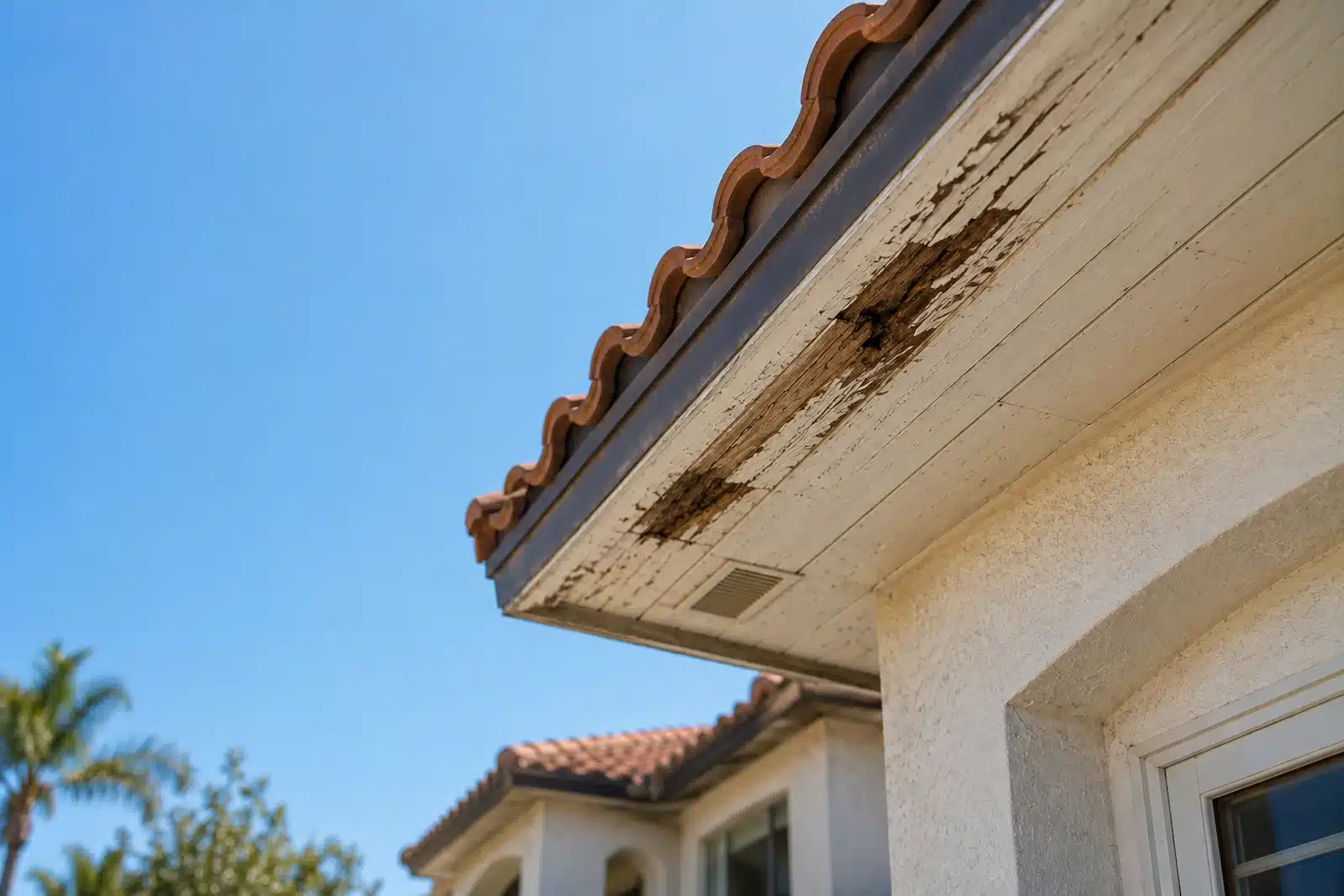
SOFFIT REPAIR GUIDE
How to Repair Rotted Soffits
A soffit is the underside of a roof overhang. Address the moisture source and establish repair suitability before removing wood or choosing materials. Inspect accessible damage only where safe; uncertain framing, supports, connections, or concealed deterioration need qualified evaluation.
THE SHORT ANSWER
How to Repair Localized Soffit Rot
Soffits frequently deteriorate after roof leaks, overflowing gutters, failed flashing, or repeated moisture exposure. Localized exterior deterioration may be a repair candidate after moisture correction and a repair-suitability decision. Visible size and firmness alone are insufficient.
The Damage Is Localized
Localized damage near fascia joints, roof edges, corners, or vent openings may be considered for repair after suitability—including remaining wood, access, support, and concealed conditions—has been established.
Confirm Repair Suitability
Whether remaining wood may be retained must be established before treatment. Apparent firmness or stability does not establish concealed condition or load-bearing suitability.
The Moisture Source Can Be Corrected
Roof leaks, gutter overflow, failed flashing, open joints, and trapped moisture must be addressed before rebuilding.
Start with How to Tell if Wood Is Rotten and What Causes Wood Rot?
INSPECT BEFORE REPAIRING
Inspect Rotted Soffits Before Repair
The visible damage may be only part of the problem. Inspect exposed and safely reachable soffit panels, fascia, flashing, gutters, and vents only where access is safe. Accessible inspection does not establish concealed condition. Resolve uncertain framing or support concerns before further exposure. For additional technical guidance on moisture-related wood deterioration, review the USDA Forest Service Wood Handbook chapter on biodeterioration.
Probe Gently
Inspect accessible deterioration only where safe. Gentle-pressure observations are screening aids, not confirmation of concealed condition or repair suitability.
Look Above the Damage
Check shingles, flashing, gutters, drip edges, and roof joints for the actual water source.
Inspect Ventilation
Confirm that soffit vents remain open and that moisture is not trapped inside the roof overhang.
Review How Much Rotten Wood Should Be Removed? before scraping, cutting, or shaping the damaged area.
MAKE THE RIGHT DECISION
When Should a Rotted Soffit Be Repaired or Replaced?
The approach depends on the extent of deterioration, remaining wood, moisture source, access, and involvement of framing or connections. Localized repair may remain a candidate after suitability is established; widespread deterioration, sagging, or uncertain concealed conditions may require replacement planning or qualified evaluation.
Repair May Be Practical When
Moisture has been addressed and suitability has been established for the localized repair, including remaining wood, access, support, and concealed-condition questions.
Replacement May Be Better When
Most of the panel is soft, ventilation is compromised, or the fascia, roof sheathing, and rafter tails have widespread damage.
Compare the options in Repair or Replace Rotten Wood?
PREPARATION MATTERS
How to Prepare a Rotted Soffit for Repair
Establish repair suitability before preparation. Prepare the evaluated area according to current product instructions; do not cover unresolved moisture or unsuitable surface material.
Stop the Water
Address roof leaks, gutter overflow, flashing problems, and recurring wetting before rebuilding. Meet current preparation requirements; obtain appropriate help where correction is beyond safe access or the repair scope.
Remove Unsound Wood
Remove deteriorated material only within the evaluated repair scope and current preparation instructions. Stop and reassess if damage extends beyond that scope.
Clean and Treat
Clean the cavity and follow the complete wood preparation process before rebuilding.
Follow the current product label and Technical Documents for preparation, application, cleanup, and safety requirements. Obtain appropriate guidance before disturbing coatings of unknown composition.
REBUILD THE DAMAGE
How to Rebuild Rotted Soffits
To repair rotted soffits successfully, the repair should recreate the underside surface, edge, corner, or trim transition while maintaining drainage, ventilation, and a smooth finish-ready profile.
Use Wood Consolidant Where Applicable
Wood Consolidant is used on prepared deteriorated wood where applicable. It does not replace missing wood or establish structural condition. When using WRP Wood Consolidant with WRP Epoxy Dough, apply the mixed dough within the approved application window, without waiting for the consolidant to fully cure. Follow the applicable product instructions.
Rebuild Missing Areas
Use WRP Dough A & B to rebuild localized missing wood where repair suitability has been established. Review the epoxy repair dough guide.
Match the Original Shape
Restore the correct flat surface, joint, reveal, and trim transition so the repair blends with the existing soffit.
CHECK THE STRUCTURE
Evaluate Roof Framing, Ventilation, and Work-at-Height Safety
A soffit repair should not hide damage in the rafter tails, roof sheathing, fascia, or wall connection. Work near roof edges may also require professional access equipment.
Resolve Concealed-Condition Concerns
Uncertain rafter tails, blocking, roof sheathing, or connections need an appropriate evaluation plan before the assembly is opened or material is removed. Stop where hidden framing, load-bearing members, electrical, plumbing, or uncertain structural conditions are involved and obtain qualified evaluation.
Preserve Airflow
Do not block soffit vents or roof ventilation pathways when rebuilding and finishing the repair.
Use Safe Access
If the repair requires roof access, tall ladders, or uncertain structural work, hire a qualified professional.
If the damage extends into the front roof-edge board, also review Repairing Rotten Fascia Boards .
THE WRP REPAIR PROCESS
How to Repair Rotted Soffits in Three Stages
Complete applicable preparation after repair suitability is established. WRP Dough A & B rebuilds localized missing wood; WRP Topping is optional refinement for minor surface imperfections.
Complete Applicable Preparation
Correct moisture problems, establish suitability, and prepare the evaluated area according to current instructions. Complete a Wood Consolidant step only where applicable.
Rebuild and Shape
Use WRP Dough A & B for suitable localized missing soffit edges, corners, or panel sections according to current instructions.
Finish and Protect
Use WRP Topping where minor surface refinement is needed; not every repair requires Topping or added texture. Preserve ventilation and follow current product and coating instructions for shaping, finishing, primer, paint, and any appropriate sealant.
COMMON QUESTIONS
Frequently Asked Questions About Rotted Soffits
These answers cover common soffit repair questions. Every roof overhang should still be evaluated based on the moisture source, ventilation, fascia, and framing.
Can a rotted soffit be repaired without replacing the whole panel?
Localized deterioration may be a repair candidate after moisture correction and repair suitability are established. Visible size, firmness, or remaining shape alone do not determine the approach.
What usually causes soffit rot?
Roof leaks, overflowing gutters, failed flashing, trapped moisture, and deteriorated coatings are common causes.
Does all soft wood need to be removed?
Remove deteriorated material only within the evaluated repair scope and current preparation instructions. Firmness alone does not establish what may remain. Stop and reassess if damage extends beyond that scope.
Can epoxy repair material be applied to damp soffit wood?
Correct the moisture source and meet the selected product’s current preparation, application, and curing requirements before applying materials. Drying alone does not establish repair suitability.
What if the rafter tails or roof sheathing are also rotten?
Uncertain framing, support, connection, or concealed conditions require qualified evaluation before removal or material selection. The appropriate repair or replacement approach depends on that evaluation.
Can the repaired soffit be sanded, caulked, and painted?
Yes. After curing, the repair can be shaped and sanded before compatible exterior primer, paint, and sealant are applied.
Which WRP kit should I use?
Kit size depends on the size, depth, and number of repairs. Review Choosing the Right WRP Repair Kit or contact WRP for product-selection help.
CONTINUE PLANNING YOUR REPAIR
Plan Your Next Step
Continue with guides covering fascia damage, damaged-wood removal, preparation, and repair-kit selection.
Repairing Rotten Fascia Boards
Learn how to inspect and restore damage along the front edge of the roof overhang.
How Much Rotten Wood Should Be Removed?
Review removal scope, stopping guidance, and the limits of firmness or probing observations before preparing an evaluated repair.
Choosing the Right WRP Repair Kit
Compare kit sizes based on the number, depth, and overall size of your repairs.
Ready to Plan a Localized Wood Repair?
Once the moisture source is addressed and the area is confirmed suitable for localized repair, compare kit options or use the Repair Wizard to plan the materials needed.