
PROJECT TYPES & REPAIRS
Porch Column Repair: How to Repair Rotten Porch Columns
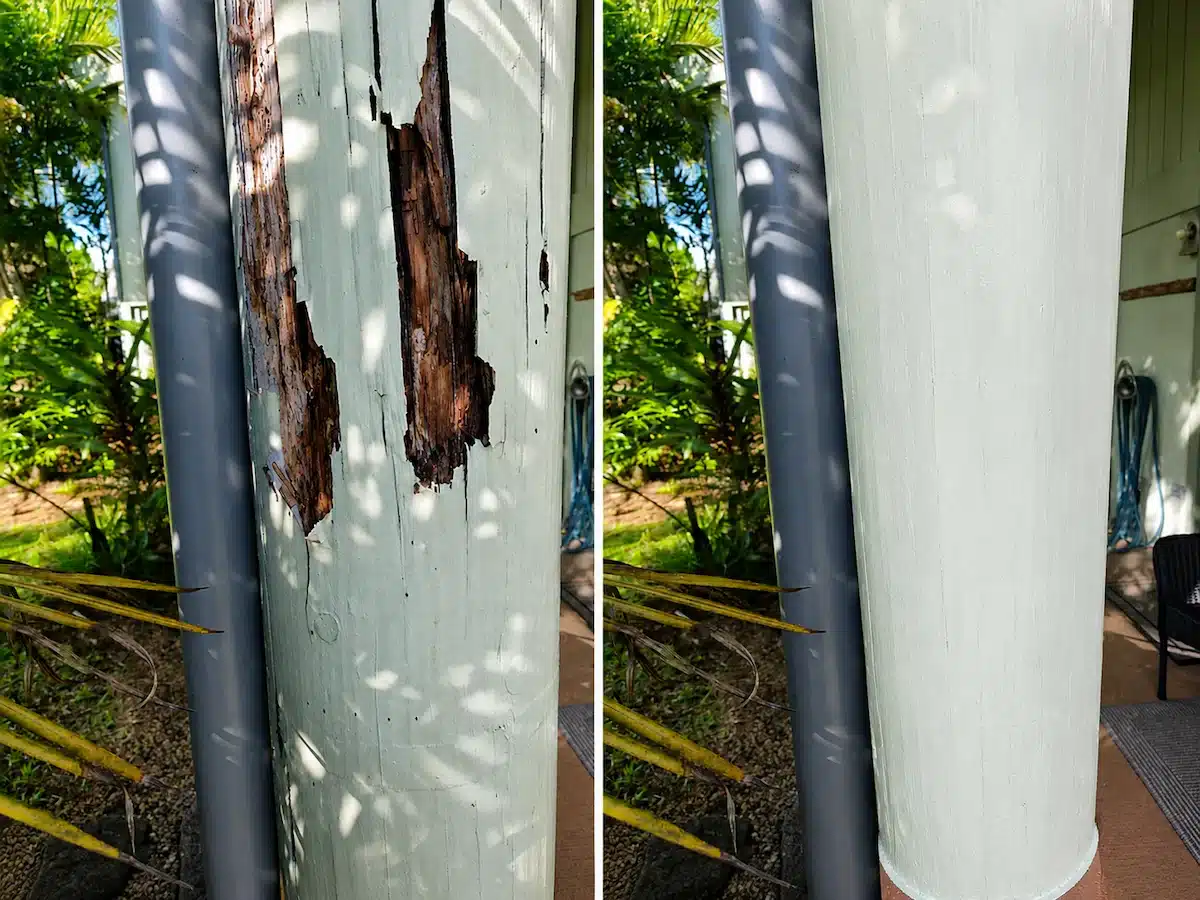
Porch column repair starts by finding the moisture source and determining whether the rot is localized or structural. This guide shows how to inspect a rotten porch column, remove unsound wood, strengthen suitable remaining fibers, rebuild a damaged column base, and protect the finished repair.
UNDERSTANDING THE DAMAGE
Why Porch Columns Rot at the Base
Rot commonly begins at a porch column base because water collects around end grain, trim joints, molding, concrete, or decking. Failed caulk, damaged paint, splashback, and poor drainage can keep the wood wet long enough for decay to develop below the surface. Correcting that moisture source is essential before any porch column repair. For additional technical background, review the USDA Forest Service chapter on wood biodeterioration.
Water Collects at the Base
Porch column bases often sit close to concrete, masonry, or decking where rainwater and cleaning water can remain trapped against the wood.
Failed Paint and Caulking
Cracked paint, open seams, and failed caulking allow moisture to enter joints around trim, base molding, and decorative column details.
Hidden Interior Moisture
Hollow or boxed columns can trap moisture inside, allowing rot to spread behind the exterior surface before visible damage appears.
Delayed Maintenance
Small cracks, peeling coatings, and soft spots can expand into larger areas of deterioration when they are not repaired early.
Understanding the source of the damage is the first step toward a lasting repair. Learn What Causes Wood Rot?, discover how WRP Wood Consolidant strengthens weakened wood, review How WRP Works, or explore more repair guides in the WRP Learning Center.
COMMON DAMAGE AREAS
Common Porch Column Repair Problems
Porch column repair often begins at the base, where splashback, standing water, open joints, and failed coatings repeatedly wet the wood. Damage may also affect decorative trim, molding, seams, and the lower shaft, so inspect the complete column before deciding whether to repair or replace it.
Porch Column Repair for Base Rot
Moisture commonly enters at the bottom edge, especially where wood sits close to concrete, masonry, decking, or wet landscaping.
Split or Cracked Wood
Open splits and checks allow moisture to move behind paint and into the column, where deterioration may spread beyond the visible opening.
Peeling Paint and Failed Caulk
Failed coatings and open seams expose end grain and joints, allowing repeated wetting around trim, base molding, and decorative details.
Loose Decorative Molding
Trim and molding can separate when hidden wood loses strength. Remove loose components carefully and inspect the wood behind them.
Moisture at Concrete or Masonry
Water can remain trapped where the column meets a hard surface. Improve drainage and prevent the repaired wood from repeatedly staying wet.
Hidden Interior Damage
Boxed or hollow columns may conceal moisture and decay. Inspect inside accessible areas and evaluate structural concerns before removing material.
Learn how to identify rotten wood, review what causes wood rot, and compare repair versus replacement before beginning your porch column base repair.
INSPECT BEFORE YOU REPAIR
How to Inspect a Rotten Porch Column Before Repair
Before removing wood, inspect the full column to determine whether the damage is confined to the base or extends behind trim, molding, or into a hollow interior. Probe suspicious areas gently, identify the moisture source, and confirm whether enough sound material remains for a dependable repair.
Inspect the Entire Column
Examine the base, shaft, trim details, joints, and capital. Visible damage often represents only a portion of the affected area.
Probe Suspicious Areas
Use a screwdriver or awl to locate soft wood beneath the surface. Sound wood should feel firm, while rotten wood will easily compress or crumble.
Identify the Moisture Source
Look for failed caulking, poor drainage, roof leaks, splash back from concrete, or standing water that may have caused the deterioration.
Plan the Restoration
Determine the extent of the repair, select the appropriate WRP Repair Kit, and gather all necessary materials before beginning work.
Learn How Much Rotten Wood Should Be Removed?, compare WRP Repair Kits, review How to Prepare Wood for Repair, or see How WRP Works before starting your repair.
PREPARE THE REPAIR
How to Prepare a Rotten Porch Column for Repair
A durable porch column repair requires a clean, dry, stable repair area. Remove loose, soft, crumbling, and detached material while preserving firm wood that can support the restoration. Correct leaks or drainage problems before applying repair materials.
Remove Every Soft Area
Continue removing damaged material until you reach firm, healthy wood capable of supporting a permanent repair.
Preserve Sound Wood
Remove only deteriorated wood whenever possible. Preserving the original column helps maintain its appearance and structural integrity.
Eliminate the Moisture Source
Repair leaking joints, failed caulking, roof drainage issues, or standing water conditions before rebuilding the damaged column.
Clean the Repair Area
Remove dust, loose fibers, paint chips, and debris so WRP Wood Consolidant can properly penetrate the remaining wood.
Prepare for Consolidation
Once the repair area is clean and solid, apply WRP Wood Consolidant to strengthen the remaining wood before rebuilding the missing sections.
Don't Rush the Preparation
Proper preparation is one of the most important factors in creating a durable, professional-quality porch column repair.
Next, learn how WRP Wood Consolidant strengthens weakened wood, review How to Prepare Wood for Repair, continue with the Epoxy Wood Repair Dough Guide, or see the complete WRP repair process.
STRENGTHEN THE WOOD
Strengthen Remaining Wood Before Rebuilding
After unsound material is removed, suitable porous wood can be strengthened with WRP Wood Consolidant before missing areas are rebuilt. The consolidant penetrates weakened fibers and creates a stable foundation for WRP Epoxy Wood Repair Dough.
Deep Penetration
WRP Wood Consolidant penetrates deep into porous wood fibers, strengthening weakened wood from within instead of simply coating the surface.
Builds a Strong Foundation
Consolidating the remaining wood creates an ideal base for WRP Epoxy Wood Repair Dough, helping maximize the strength of the finished repair.
Preserve the Original Column
Strengthening existing wood allows much of the original porch column to remain in place while restoring the damaged areas.
Ready for Rebuilding
Once the consolidant has cured according to the product instructions, the repair is ready to be rebuilt with WRP Epoxy Wood Repair Dough.
Learn more about WRP Wood Consolidant, continue with the Epoxy Wood Repair Dough Guide, review How WRP Works, or browse the WRP Product Line.
REBUILD THE MISSING WOOD
How to Repair a Rotten Porch Column Base
For localized base rot, rebuild the missing section with WRP Epoxy Wood Repair Dough after the remaining wood has been properly prepared and consolidated. Pack the material firmly into the cavity, recreate the original column profile, and leave enough material for final shaping after cure.
Mix Thoroughly
Mix equal parts of the epoxy repair dough until the color is completely uniform. Proper mixing ensures maximum strength and a consistent cure.
Pack the Repair Completely
Press the epoxy firmly into every part of the repair cavity to eliminate air pockets and create a strong bond with the consolidated wood.
Restore the Original Profile
Shape the repair to match the original column profile, moldings, and decorative details. Leave the repair slightly proud so it can be sanded perfectly flush after curing.
Finish Like Real Wood
After curing, sand the repair smooth. If needed, apply WRP Topping Compound and blend Fine, Medium, and Coarse Texture Powders to recreate the surrounding wood grain before priming and painting.
Continue with the WRP Epoxy Wood Repair Dough Guide, learn when to use WRP Topping Compound, review How WRP Works, or browse the complete WRP Product Line.
COMPLETE THE RESTORATION
Finish and Protect Your Porch Column Repair
After the repair cures, shape and sand it to match the surrounding column, refine the surface if needed, then prime, paint, and reseal vulnerable joints. Keep water from collecting at the base and inspect coatings and caulk periodically so moisture problems are caught early.
Sand the Repair Smooth
Shape and sand the cured epoxy until it blends seamlessly with the original porch column profile before applying any finish coats.
Texture, Prime, and Paint
Apply WRP Topping Compound if needed and blend Fine, Medium, and Coarse Texture Powders to recreate the wood grain before applying a quality exterior primer and paint.
Keep Water Out
Replace failed caulking, improve drainage, and repair roof or gutter leaks so moisture cannot collect around the porch column again.
Perform Annual Inspections
Inspect porch columns each year for peeling paint, cracked caulking, or early signs of moisture damage so minor problems can be repaired before extensive deterioration occurs.
Continue learning when to use WRP Topping Compound, discover what causes wood rot, review How WRP Works, or explore additional repair guides in the WRP Learning Center.
REPAIR OR REPLACE?
Repair or Replace a Rotten Porch Column?
Localized porch column rot can often be repaired when enough sound wood remains and the structural function of the column is intact. Replacement or professional structural evaluation is more appropriate when deterioration is widespread, the core is compromised, or load-bearing capacity is uncertain.
Inspect the Entire Column
Determine whether the deterioration is confined to the column base or extends into structural framing or support members.
Remove All Rotten Wood
Remove every section of loose and deteriorated wood while preserving as much healthy wood as possible.
Restore the Original Profile
Strengthen the remaining wood, rebuild missing areas, and recreate the original architectural details of the porch column.
Protect the Finished Repair
Sand, texture if needed, prime, paint, and correct the source of moisture to help prevent future deterioration.
Repair When
The damage is localized, the remaining column is structurally sound, and the original architectural details can be restored using the WRP repair system.
Replace When
The structural core, framing, or load-bearing components have extensive deterioration that cannot be safely restored.
Need Help Evaluating Your Project?
Send WRP photos of your damaged porch column and we'll help determine whether repair or replacement is the best solution for your project.
Continue learning with Choosing the Right WRP Repair Kit, How WRP Works, Before & After Projects, or explore more repair guides in the WRP Learning Center.
FREQUENTLY ASKED QUESTIONS
Porch Column Repair FAQs
These answers cover common questions about rotten porch column bases, repair versus replacement, preparation, finishing, and choosing the right WRP materials.
Can a rotten porch column be repaired instead of replaced?
Yes, when the deterioration is localized and enough sound wood remains to support a durable repair. The damaged area can often be removed, consolidated, rebuilt, shaped, and finished without replacing the entire column.
What causes porch columns to rot near the bottom?
Moisture commonly collects near the base because of rain, splashback, standing water, failed caulking, damaged paint, poor drainage, or direct contact with concrete or masonry. Learn more in What Causes Wood Rot?
How much rotten wood should be removed?
Remove all loose, soft, crumbling, detached, and unsound wood until only clean, stable material remains. Review How Much Rotten Wood Should Be Removed? before beginning the repair.
Should WRP Wood Consolidant be used before rebuilding?
Yes, when suitable weakened wood remains. WRP Wood Consolidant penetrates porous fibers and strengthens the repair foundation before WRP Epoxy Wood Repair Dough is applied.
Can a repaired porch column be sanded and painted?
Yes. After curing, the repair can be shaped, sanded, primed, and painted. WRP Topping Compound and Texture Powders can also be used to refine the surface and recreate the surrounding wood grain before finishing.
Can WRP be used on a load-bearing porch column?
The repair area may be restorable, but load-bearing columns should be evaluated carefully before work begins. If the structural core, framing, or support capacity is uncertain, consult a qualified contractor, engineer, or other appropriate professional before proceeding.
Which WRP Repair Kit should I use?
Kit selection depends on the size, depth, and number of damaged areas. Compare the Starter, Medium, Large, and XL options in Choosing the Right WRP Repair Kit.
How can I help prevent the porch column from rotting again?
Correct the moisture source, improve drainage, replace failed caulking, maintain protective coatings, and keep the column base from holding standing water. Inspect the column regularly for early signs of coating failure or moisture intrusion.
How do you repair a rotten porch column base?
Begin by correcting the moisture source and determining whether the column is load-bearing. Remove loose and deteriorated wood, preserve firm material, strengthen suitable remaining fibers with WRP Wood Consolidant, and rebuild the missing profile with WRP Epoxy Wood Repair Dough.
When should a porch column be replaced instead of repaired?
Replacement may be necessary when deterioration is widespread, the structural core or framing has lost capacity, or too little sound wood remains to support a dependable repair. Load-bearing uncertainty should be evaluated by a qualified professional.
Can decorative porch columns and molding be repaired?
Yes, localized damage to decorative profiles, base trim, and molding can often be rebuilt when enough sound wood remains. The repair can be shaped, sanded, textured, primed, and painted to match the surrounding details.
Can WRP help evaluate my porch column repair?
Yes. Send clear photos and a brief description of the damaged area through the WRP Contact page for help choosing the appropriate repair approach and kit.
CONTINUE LEARNING
Plan Your Porch Column Repair
Use these guides to evaluate the damage, understand the WRP repair process, choose the right kit size, and decide whether your porch column is a good candidate for repair.
Review the Complete Repair Process
Learn how preparation, consolidation, epoxy rebuilding, surface finishing, priming, and painting work together in the complete WRP system.
Choose the Right WRP Repair Kit
Compare the Starter, Medium, Large, and XL kits to select the right amount of material for your porch column restoration.
Get Help Evaluating the Damage
Send WRP clear photos and a brief description of the damaged porch column for help choosing the most appropriate repair approach.
Continue reading Repairing Rotten Fascia Boards, Repairing Structural Beam Ends, Garage Door Wood Trim Repair, Repairing Rotten Window Sills, What Causes Wood Rot?, How Much Rotten Wood Should Be Removed?, Wood Consolidant Explained, Epoxy Wood Repair Dough Guide, and When to Use WRP Topping Compound. You can also view real WRP before-and-after projects for more repair examples.