
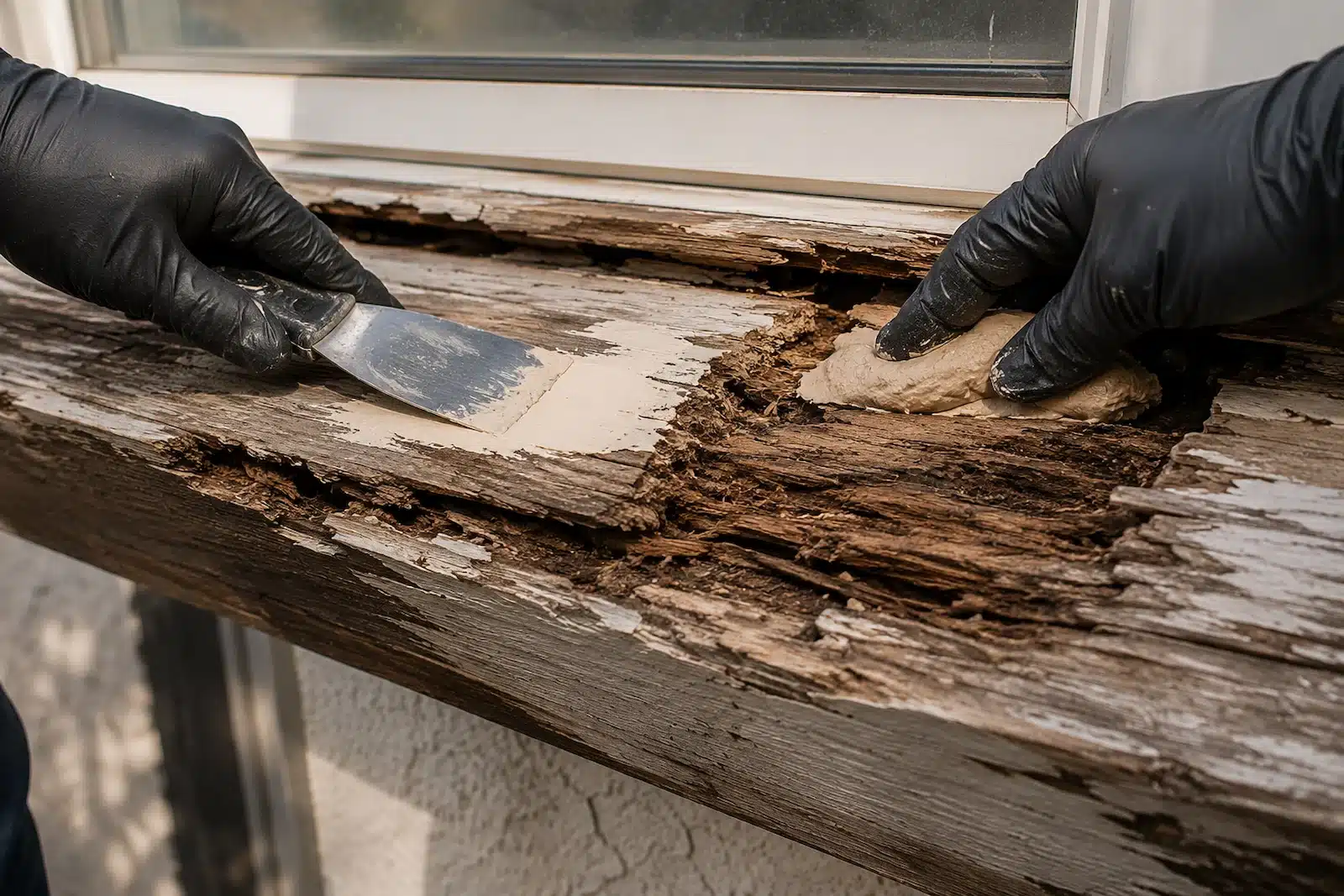
CHOOSING A WOOD REPAIR MATERIAL
Wood Filler vs. Epoxy Wood Repair: Which Is Best for Exterior Wood?
Wood filler and epoxy repair materials serve different purposes. The right choice depends on the depth of the damage, the condition of the surrounding wood, the exposure, and whether the repair must recreate missing material.
THE SHORT ANSWER
Match the Material to the Damage
Traditional wood filler is generally used for shallow cosmetic defects in otherwise sound wood. Epoxy wood repair materials are used when a repair must rebuild a deeper cavity, missing edge, corner, or profile. Neither material corrects an active moisture problem or makes an unsafe component structurally suitable.
Use Wood Filler for Cosmetic Defects
Consider a filler for small nail holes, shallow dents, scratches, or minor surface imperfections when the surrounding wood is firm and the selected product is approved for the location.
Use Epoxy to Rebuild Missing Wood
Consider an epoxy wood repair material when deterioration has left a deeper or irregular cavity, or when an edge, corner, or profile must be recreated after unsound wood is removed.
Resolve Moisture and Safety First
Correct leaks or drainage problems before filling the area. Movement, significant section loss, or damage to a load-bearing or safety-critical component requires appropriate evaluation before material selection.
Wood filler and epoxy are broad product categories. Application depth, cure conditions, exterior suitability, preparation, and coating requirements vary. Follow the current instructions for the specific product selected.
SIDE-BY-SIDE COMPARISON
How the Two Repair Approaches Differ
Start with the condition of the wood and the shape that must be restored. Then confirm that the chosen product is intended for the repair depth and exposure.
| Repair factor | Traditional wood filler | Epoxy wood repair |
|---|---|---|
| Typical use | Small cosmetic defects in sound wood | Deeper cavities and missing sections |
| Repair shape | Shallow filling and surface smoothing | Rebuilding edges, corners, and profiles |
| Surrounding wood | Firm, stable, and suitable for the selected filler | Unsound material removed, with suitable remaining wood |
| Exterior use | Only when the product is labeled for the exposure | Only when the system is intended for exterior wood repair |
| Preparation | Follow the selected product's surface requirements | Remove unsound wood and follow the repair system's preparation requirements |
| Not a substitute for | Moisture correction, structural evaluation, or replacement when the component is not a suitable repair candidate | |
WHEN FILLER FITS
Choose Wood Filler for Minor Defects in Sound Wood
A conventional filler may be appropriate when the defect is shallow, the surrounding wood is firm, and the product is intended for the location and planned finish.
Nail and Screw Holes
Small fastener holes may need only a shallow cosmetic fill before sanding, priming, and painting.
Shallow Dents and Gouges
Surface damage may be a filler candidate when it does not extend into loose or decayed fibers.
Minor Surface Checks
A small stable check may be suitable when the wood is dry and the product is approved for the exposure.
Surface Touch-Ups
A compatible filler may correct small imperfections after the main repair has restored the missing section.
Firm Surrounding Wood
The material around the defect should remain attached and stable. Filler should not conceal active deterioration.
Product-Specific Limits
Interior and exterior fillers are not interchangeable. Confirm depth, exposure, cure, primer, and coating requirements.
WHEN MATERIAL IS MISSING
Choose Epoxy When the Repair Must Rebuild a Shape
An epoxy wood repair material may be appropriate after deterioration has been removed and the repair must recreate a deeper section, edge, corner, or profile.
Deeper Cavities
Epoxy repair materials can be considered when a shallow cosmetic filler is not intended for the depth or shape of the prepared cavity.
Missing Edges and Corners
A repair material that can be shaped may recreate a sill nose, trim edge, jamb corner, or similar detail.
Irregular Damage
The repair can follow the prepared cavity instead of removing additional sound wood simply to make a regular opening.
Exterior Exposure
Use only a repair system intended for the exposure and follow its requirements for preparation, cure conditions, primer, and coating.
Repairing in Place
Rebuilding may preserve an existing profile when the component remains an appropriate repair candidate.
Structural or Safety-Critical Damage
Material selection alone does not establish that a beam, column, railing, stair, or critical connection is suitable for repair.
DECISION CHECKLIST
Check the Wood, Depth, Shape, and Exposure
Do not choose the repair material from the visible surface alone. Work through these questions after the moisture source and full extent of the damage are understood.
Is the Remaining Wood Suitable?
Soft, loose, brittle, or detached material should not be hidden beneath filler or epoxy. If suitability is uncertain, pause and seek appropriate guidance.
How Deep Is the Defect?
A shallow cosmetic defect and a deep missing section call for different material properties and product instructions.
Must the Repair Recreate a Shape?
Missing edges, corners, and profiles generally require a material intended for rebuilding rather than surface smoothing.
What Exposure Will It Face?
Confirm that the product, primer, and coating are compatible with the interior or exterior conditions.
Is the Component Safety-Critical?
Movement, significant section loss, or damage involving structural or fall-protection components requires evaluation beyond choosing a filler.
MISTAKES AND SAFETY
Avoid Covering the Problem Instead of Correcting It
The selected material cannot compensate for active moisture, unsound wood, unsuitable preparation, or an unresolved safety concern.
Filling Over Active Deterioration
Do not use repair material to conceal wood that is loose, crumbling, detached, or continuing to deteriorate.
Ignoring the Moisture Source
Correct leaks, failed flashing, drainage problems, or coating failures before relying on the repair.
Using the Wrong Product Outdoors
Confirm that the selected product is intended for the exposure and compatible with the planned finish.
Exceeding Product Limits
Depth, temperature, cure, mixing, sanding, priming, and coating requirements vary. Follow the current product instructions.
Skipping Full Inspection
Surface appearance may not show the complete cavity or damage in connected components.
Treating Evaluation as a Material Choice
A filler or epoxy recommendation does not determine whether a structural or safety-critical component can remain in service.
When to pause
Seek appropriate evaluation when damage involves a load-bearing member, railing, stair, critical connection, significant movement, widespread deterioration, or uncertainty about the remaining wood.
IF EPOXY IS APPROPRIATE
Use the Repair Material as Part of a Defined Process
The sequence begins before rebuilding. Correct the cause, expose the full repair area, prepare suitable remaining wood as directed, then rebuild and finish.
Assess and Correct
Identify the moisture source, inspect connected wood, and determine whether the component is an appropriate repair candidate.
Remove and Prepare
Remove unsound material and follow the selected repair system's requirements for cleaning and preparing suitable remaining wood.
Rebuild and Finish
Apply the repair material according to current instructions, restore the profile, and use compatible primer and coating where required.
COMMON QUESTIONS
Wood Filler and Epoxy Repair FAQs
The answer depends on the specific product, repair depth, exposure, condition of the remaining wood, and function of the component.
Is epoxy always a better choice than wood filler?
No. A conventional filler may be appropriate for a small cosmetic defect in sound wood. Epoxy repair materials are considered when the repair must rebuild a deeper or missing section.
Can wood filler be placed over rotten wood?
Do not conceal loose or deteriorated fibers with filler. Identify the cause, expose the full damage, remove material that is not suitable for the repair, and determine whether filler, epoxy repair, or replacement is appropriate.
Can epoxy wood repair materials be used outdoors?
Only use a product or system intended for the exposure. Follow its current requirements for preparation, application conditions, cure, primer, and coating.
Will filler or epoxy stop wood rot?
No repair material corrects a leak, drainage problem, failed flashing, damaged coating, or other active moisture source. Correct the cause before completing the repair.
How much damaged wood should be removed?
Remove material that is loose, soft, crumbling, brittle, or detached, then assess whether the remaining wood is suitable for the selected repair. Read How Much Rotten Wood Should Be Removed? for a more detailed discussion.
Can epoxy repair make a structural component safe?
Material selection alone cannot establish structural suitability. Significant section loss, movement, or damage involving beams, columns, stairs, railings, or critical connections requires project-specific evaluation.
PROJECT-SPECIFIC HELP
Still Unsure Which Approach Fits the Damage?
WRP can help with product planning after you share clear photos and details about the damaged area. Structural or safety questions require the appropriate qualified evaluation.