
SOFFIT REPAIR GUIDE
How to Repair Rotted Soffits
Learn how to repair rotted soffits by inspecting the damage, finding the source of moisture, removing unsound wood, rebuilding the missing area, and protecting the repair.
THE SHORT ANSWER
How to Repair Localized Soffit Rot
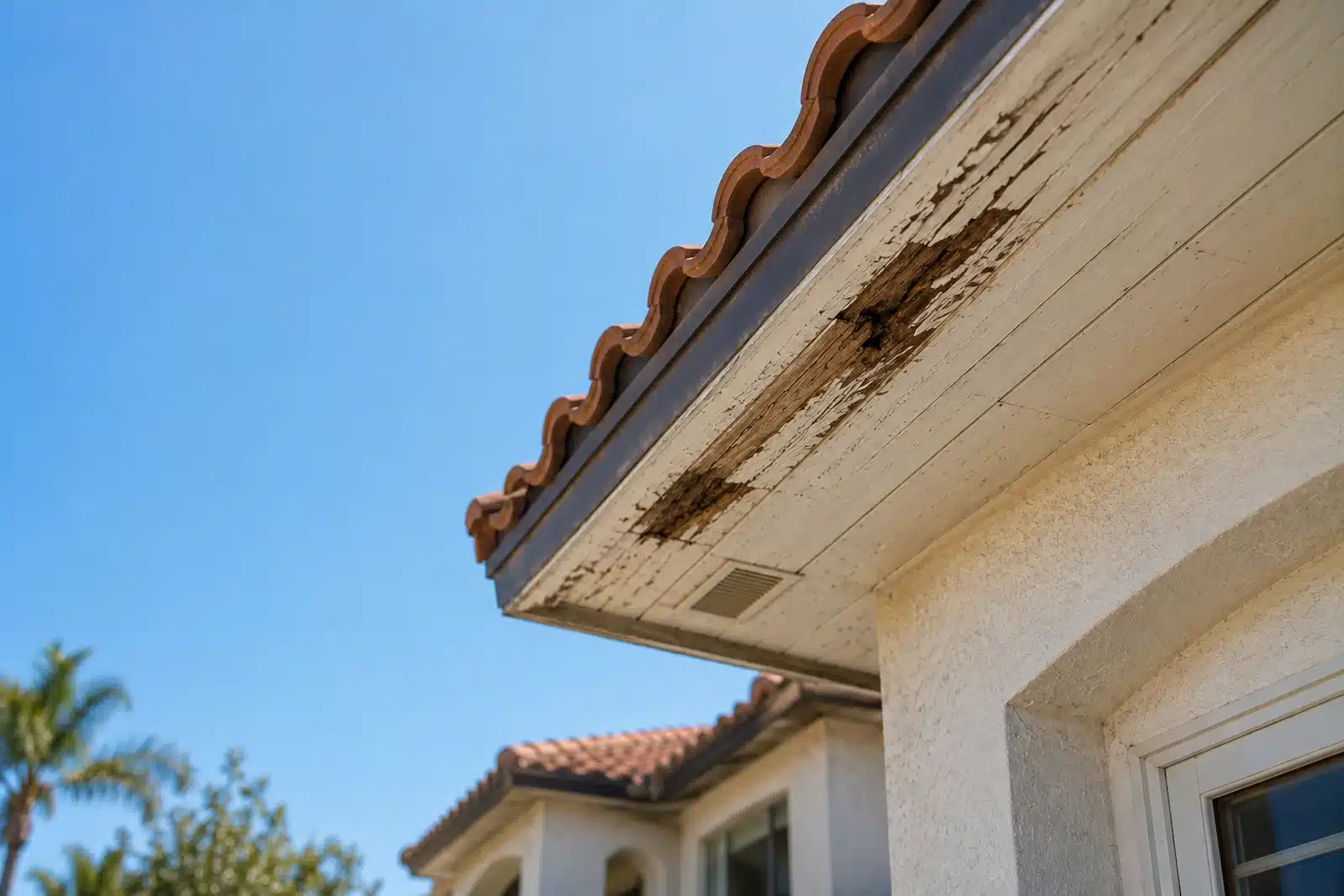
When learning how to repair rotted soffits, remember that soffits frequently deteriorate after roof leaks, overflowing gutters, failed flashing, or repeated moisture exposure. Repair may be practical when the damage is localized and enough firm wood remains.
The Damage Is Localized
Small damaged sections near fascia joints, roof edges, corners, or vent openings may be rebuilt without replacing the entire soffit.
Firm Wood Still Remains
Stable surrounding wood must remain after loose, brittle, and crumbling material is removed.
The Moisture Source Can Be Corrected
Roof leaks, gutter overflow, failed flashing, open joints, and trapped moisture must be addressed before rebuilding.
Start with How to Tell if Wood Is Rotten and What Causes Wood Rot?
INSPECT BEFORE REPAIRING
Inspect Rotted Soffits Before Repair
The visible damage may be only part of the problem. Inspect the soffit panel, fascia board, roof sheathing, rafter tails, flashing, gutters, and vents before deciding whether the area can be repaired. For additional technical guidance on moisture-related wood deterioration, review the USDA Forest Service Wood Handbook chapter on biodeterioration.
Probe Gently
Check whether the wood is firm or soft without forcing a tool through healthy material.
Look Above the Damage
Check shingles, flashing, gutters, drip edges, and roof joints for the actual water source.
Inspect Ventilation
Confirm that soffit vents remain open and that moisture is not trapped inside the roof overhang.
Review How Much Rotten Wood Should Be Removed? before scraping, cutting, or shaping the damaged area.
MAKE THE RIGHT DECISION
When Should a Rotted Soffit Be Repaired or Replaced?
How to repair rotted soffits depends on the extent of the deterioration. Repair is best for localized damage, while replacement is usually more appropriate when large sections have failed, the panel is sagging, or hidden framing and roof sheathing are extensively damaged.
Repair May Be Practical When
The damaged area is limited, firm wood surrounds the cavity, and the original profile can be rebuilt without trapping moisture.
Replacement May Be Better When
Most of the panel is soft, ventilation is compromised, or the fascia, roof sheathing, and rafter tails have widespread damage.
Compare the options in Repair or Replace Rotten Wood?
PREPARATION MATTERS
How to Prepare a Rotted Soffit for Repair
A durable approach to how to repair rotted soffits starts with clean, dry, stable wood. Do not place repair material over loose fibers, trapped moisture, dirt, peeling paint, or failed caulk.
Stop the Water
Repair roof leaks, clear gutters, correct flashing problems, and allow the overhang to dry.
Remove Unsound Wood
Remove soft, brittle, crumbling, and detached material while preserving firm wood that can support the repair.
Clean and Treat
Clean the cavity and follow the complete wood preparation process before rebuilding.
REBUILD THE DAMAGE
How to Rebuild Rotted Soffits
To repair rotted soffits successfully, the repair should recreate the underside surface, edge, corner, or trim transition while maintaining drainage, ventilation, and a smooth finish-ready profile.
Strengthen Suitable Remaining Wood
Apply the appropriate WRP consolidant to weakened but salvageable fibers and allow it to cure according to current product instructions.
Rebuild Missing Areas
Use WRP epoxy repair dough to recreate missing corners, edges, and localized panel sections. Review the epoxy repair dough guide.
Match the Original Shape
Restore the correct flat surface, joint, reveal, and trim transition so the repair blends with the existing soffit.
CHECK THE STRUCTURE
Evaluate Roof Framing, Ventilation, and Work-at-Height Safety
A soffit repair should not hide damage in the rafter tails, roof sheathing, fascia, or wall connection. Work near roof edges may also require professional access equipment.
Inspect Hidden Framing
Check rafter tails, blocking, and roof sheathing for soft or damaged wood behind the soffit.
Preserve Airflow
Do not block soffit vents or roof ventilation pathways when rebuilding and finishing the repair.
Use Safe Access
If the repair requires roof access, tall ladders, or uncertain structural work, hire a qualified professional.
If the damage extends into the front roof-edge board, also review Repairing Rotten Fascia Boards .
THE WRP REPAIR PROCESS
How to Repair Rotted Soffits in Three Stages
The WRP process prepares and strengthens suitable remaining wood, rebuilds the missing section, and restores a finish-ready soffit profile.
Prepare and Strengthen
Correct moisture problems, remove unsound wood, clean the cavity, and consolidate suitable remaining fibers.
Rebuild and Shape
Restore the missing soffit edge, corner, or localized panel section with WRP epoxy repair material.
Finish and Protect
Refine the surface, preserve ventilation, then prime, paint, caulk, and maintain the repaired area.
COMMON QUESTIONS
Frequently Asked Questions About Rotted Soffits
These answers cover common soffit repair questions. Every roof overhang should still be evaluated based on the moisture source, ventilation, fascia, and framing.
Can a rotted soffit be repaired without replacing the whole panel?
Sometimes. Localized damage may be repaired when enough firm wood remains and the original soffit profile can be accurately rebuilt.
What usually causes soffit rot?
Roof leaks, overflowing gutters, failed flashing, trapped moisture, and deteriorated coatings are common causes.
Does all soft wood need to be removed?
Loose, brittle, crumbling, and detached material should be removed. Preserve firm wood that can support the repair.
Can epoxy repair material be applied to damp soffit wood?
No. Correct the leak and allow the prepared area to dry enough for the selected materials to penetrate, bond, and cure properly.
What if the rafter tails or roof sheathing are also rotten?
Those areas may require separate structural repair or replacement. Consult a qualified professional when framing damage is extensive or uncertain.
Can the repaired soffit be sanded, caulked, and painted?
Yes. After curing, the repair can be shaped and sanded before compatible exterior primer, paint, and sealant are applied.
Which WRP kit should I use?
Kit size depends on the size, depth, and number of repairs. Review Choosing the Right WRP Repair Kit or contact WRP for product-selection help.
CONTINUE PLANNING YOUR REPAIR
Prepare for a Complete Soffit Repair
Continue with guides covering fascia damage, damaged-wood removal, preparation, and repair-kit selection.
Repairing Rotten Fascia Boards
Learn how to inspect and restore damage along the front edge of the roof overhang.
How Much Rotten Wood Should Be Removed?
Learn how to remove unsound material while preserving firm wood that can support the repair.
Choosing the Right WRP Repair Kit
Compare kit sizes based on the number, depth, and overall size of your repairs.