
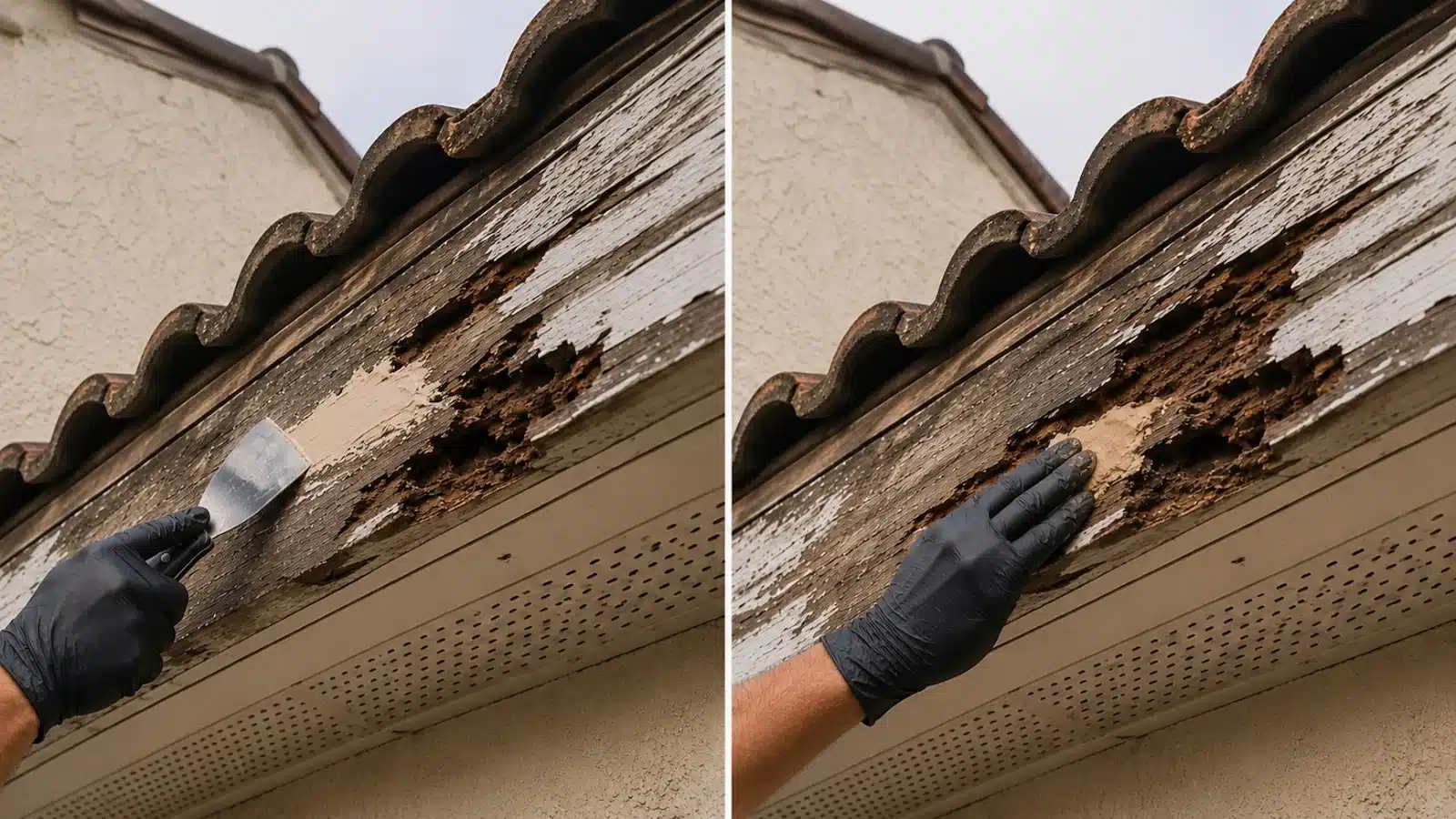
COMPARING TWO-PART WOOD FILLERS
Epoxy Wood Filler vs. Polyester Wood Filler: Which Is Best for Exterior Repairs?
Epoxy Wood Filler vs. Polyester Wood Filler compares two common two-part repair materials, including strength, flexibility, working time, exterior durability, and the types of repairs each material handles best.
THE SHORT ANSWER
Epoxy Wood Filler vs. Polyester Wood Filler: The Short Answer
Polyester wood filler is fast-curing, easy to sand, and useful for shallow defects in sound wood. Epoxy wood filler is generally the stronger choice for deeper cavities, missing edges, irregular rot damage, and exterior repairs that must remain securely bonded over time.
Polyester Wood Filler
Best for small, shallow cosmetic repairs where speed, smooth spreading, and easy sanding are the main priorities.
Epoxy Wood Filler
Better for rebuilding deeper voids, missing profiles, and substantial exterior damage after all unsound wood is removed.
Preparation Determines Performance
Neither material should be applied over active moisture, loose fibers, or untreated decay. Prepare the cavity correctly first. For technical guidance on wood moisture, decay, and exterior performance, review the USDA Forest Service Wood Handbook.
Start with How to Tell If Wood Is Rotten and How Much Rotten Wood Should Be Removed?.
SIDE-BY-SIDE COMPARISON
How Epoxy Wood Filler vs. Polyester Wood Filler Differs
When comparing Epoxy Wood Filler vs. Polyester Wood Filler, both are two-part repair materials, but they differ in bonding, flexibility, working time, repair depth, and long-term exterior performance.
| Repair Factor | Epoxy Wood Filler | Polyester Wood Filler |
|---|---|---|
| Best use | Deep cavities, missing sections, and exterior restoration | Small cosmetic defects and shallow surface repairs |
| Bonding | Strong adhesion to properly prepared wood and irregular cavities | Best on clean, dry, stable, shallow surfaces |
| Flexibility | Better able to tolerate normal seasonal wood movement | Typically cures harder and more brittle |
| Working time | Usually longer and more controllable | Usually short and fast-setting |
| Sanding | Sandable after cure but may require more shaping effort | Generally sands quickly and easily |
| Exterior suitability | Well suited when formulated for exterior wood restoration | Best limited to shallow repairs that will be fully sealed and painted |
| Shape rebuilding | Well suited to edges, corners, profiles, and irregular voids | Limited to thinner cosmetic applications |
WHEN POLYESTER MAKES SENSE
Choose Polyester for Small Cosmetic Defects in Sound Wood
Polyester filler can be practical when the damage is shallow, the surrounding wood is completely firm, and the goal is to create a smooth painted surface quickly.
Nail and Screw Holes
Small fastener holes can often be filled, sanded, primed, and painted without rebuilding the surrounding profile.
Shallow Dents and Gouges
Minor surface damage may suit polyester when it does not extend into loose or decayed wood.
Small Stable Checks
Limited cracks may be candidates when the wood is dry and the filler is approved for the exposure.
Fast Turnaround
Short cure times make polyester useful when quick sanding and recoating are important.
Protected Locations
Repairs under cover or away from recurring water exposure place fewer demands on a cosmetic filler.
Firm Surrounding Wood
The repair area must remain solid and securely attached. Polyester should not be used to hide active decay.
WHEN EPOXY IS THE BETTER CHOICE
Choose Epoxy When the Repair Must Rebuild Missing Exterior Wood
A purpose-built epoxy repair system is generally the better option when deterioration creates a deeper cavity or removes part of an edge, corner, fascia, sill, trim profile, column detail, or beam end.
Deep Cavities
Epoxy can fill irregular openings after loose, crumbling, and detached wood has been removed.
Missing Edges and Corners
The material can be shaped to recreate fascia edges, sill noses, jamb corners, and trim profiles.
Exterior Exposure
Use a system intended for exterior wood and follow its preparation, cure, priming, and coating requirements.
Irregular Rot Damage
Epoxy can conform to the prepared cavity without removing healthy wood merely to create a square opening.
Repairs Made in Place
Restoration may preserve original details and reduce demolition when the component remains suitable for repair.
System-Based Restoration
For durable results, epoxy is paired with moisture correction, preparation, treatment, and final protection.
Learn more in the Epoxy Wood Repair Dough Guide.
MAKE THE DECISION
How to Choose Between Epoxy and Polyester Wood Filler
Do not choose by cure speed or product name alone. Inspect the wood and decide what the repair must accomplish.
Is the Wood Still Sound?
If the surrounding wood is soft, crumbling, detached, or actively wet, more preparation is required before either material is appropriate.
How Deep Is the Defect?
Shallow cosmetic damage may suit polyester. A deep cavity or missing section usually points toward epoxy.
Must You Rebuild a Shape?
If the project requires recreating an edge, corner, profile, or substantial volume, epoxy is generally more appropriate.
Will It Be Exposed Outdoors?
Confirm that every repair, primer, coating, and sealant is suitable for exterior exposure and the expected movement of the wood.
Is Repair Still Appropriate?
Severe section loss, unsafe movement, or critical structural damage may require professional evaluation or replacement.
AVOID THESE PROBLEMS
Epoxy Wood Filler vs. Polyester Wood Filler Mistakes
Even the correct material can fail when it is applied over wet, loose, contaminated, or poorly prepared wood.
Filling Over Active Rot
Repair material should not be used to cover soft, crumbling, or detached fibers that cannot support the restoration.
Ignoring the Moisture Source
Leaks, failed caulk, poor flashing, and drainage problems must be corrected or damage can return around the repair.
Using Polyester Too Deeply
Polyester is generally best kept to shallow cosmetic repairs rather than substantial rebuilding.
Ignoring Wood Movement
Exterior wood expands and contracts. A hard, brittle repair may lose adhesion when movement is not considered.
Skipping Product Instructions
Mixing, temperature, cure time, layer thickness, sanding, and coating requirements vary by product.
Repairing Unsafe Components
Load-bearing members, stairs, railings, and critical connections may require qualified evaluation before work begins.
A COMPLETE REPAIR PROCESS
Exterior Epoxy Repairs Work Best as Part of a Complete Restoration System
The repair material is only one part of the project. A durable exterior restoration begins with diagnosis and moisture correction, then moves through preparation, treatment, rebuilding, and finishing.
Correct and Prepare
Stop the water source, remove unsound material, clean the cavity, and allow the wood to reach the condition required by the repair system.
Treat and Strengthen
Use the appropriate treatment, consolidant, and reinforcement where the project and system instructions call for them.
Rebuild and Finish
Pack and shape the repair material, allow it to cure, refine the profile, and protect the repair with compatible primer and paint.
COMMON QUESTIONS
Epoxy Wood Filler vs. Polyester Wood Filler FAQs
The correct material depends on repair depth, exposure, working time, and the condition of the surrounding wood.
Is Bondo a polyester wood filler?
Bondo-style wood fillers are generally polyester-based two-part fillers. Confirm the chemistry and approved uses of the specific product on its current label or technical data sheet.
Is epoxy stronger than polyester wood filler?
For substantial exterior restoration, epoxy generally provides better adhesion, cavity filling, and tolerance of normal wood movement. Performance still depends on preparation and correct product selection.
Can polyester wood filler be used outdoors?
Some polyester fillers are marketed for exterior use, but they are generally best reserved for shallow cosmetic repairs that will be fully sealed, primed, painted, and maintained.
Which filler is easier to sand?
Polyester filler usually sands faster and more easily. Epoxy may require more shaping effort but is chosen for its bonding and rebuilding performance.
Can either filler be applied over rotten wood?
No. Remove loose, soft, brittle, crumbling, and detached material before repair. Correct the moisture source and determine whether the remaining wood is stable enough to restore.
Can epoxy repair structural wood?
Some epoxy systems are intended for substantial restoration, but critical load-bearing damage should be evaluated individually. Replacement or engineered reinforcement may still be necessary.
Does epoxy wood filler need to be painted?
Exterior epoxy repairs should generally be shaped, primed, painted, and maintained with a compatible finishing system.