
FENCE POST REPAIR GUIDE
How to Repair Rotted Fence Posts
Learn how to inspect a damaged fence post, decide whether repair or replacement makes sense, remove unsound wood, rebuild the damaged area, and protect the finished repair.
THE SHORT ANSWER
Some Rotted Fence Posts Can Be Repaired
A fence post may be repairable when the damage is limited, enough firm wood remains, the post is still stable, and the source of moisture can be reduced or corrected.
The Damage Is Localized
Small areas near the base, around fasteners, or along one side of the post may be practical to restore.
The Post Is Still Stable
The post should remain upright, securely supported, and strong enough to carry the fence load after damaged wood is removed.
Moisture Can Be Controlled
Soil contact, sprinklers, trapped debris, and failed coatings must be addressed so the repaired area can stay drier.
Begin by reviewing how to tell if wood is rotten and what causes wood rot.
INSPECT BEFORE REPAIRING
Check the Fence Post Above and Below the Visible Damage
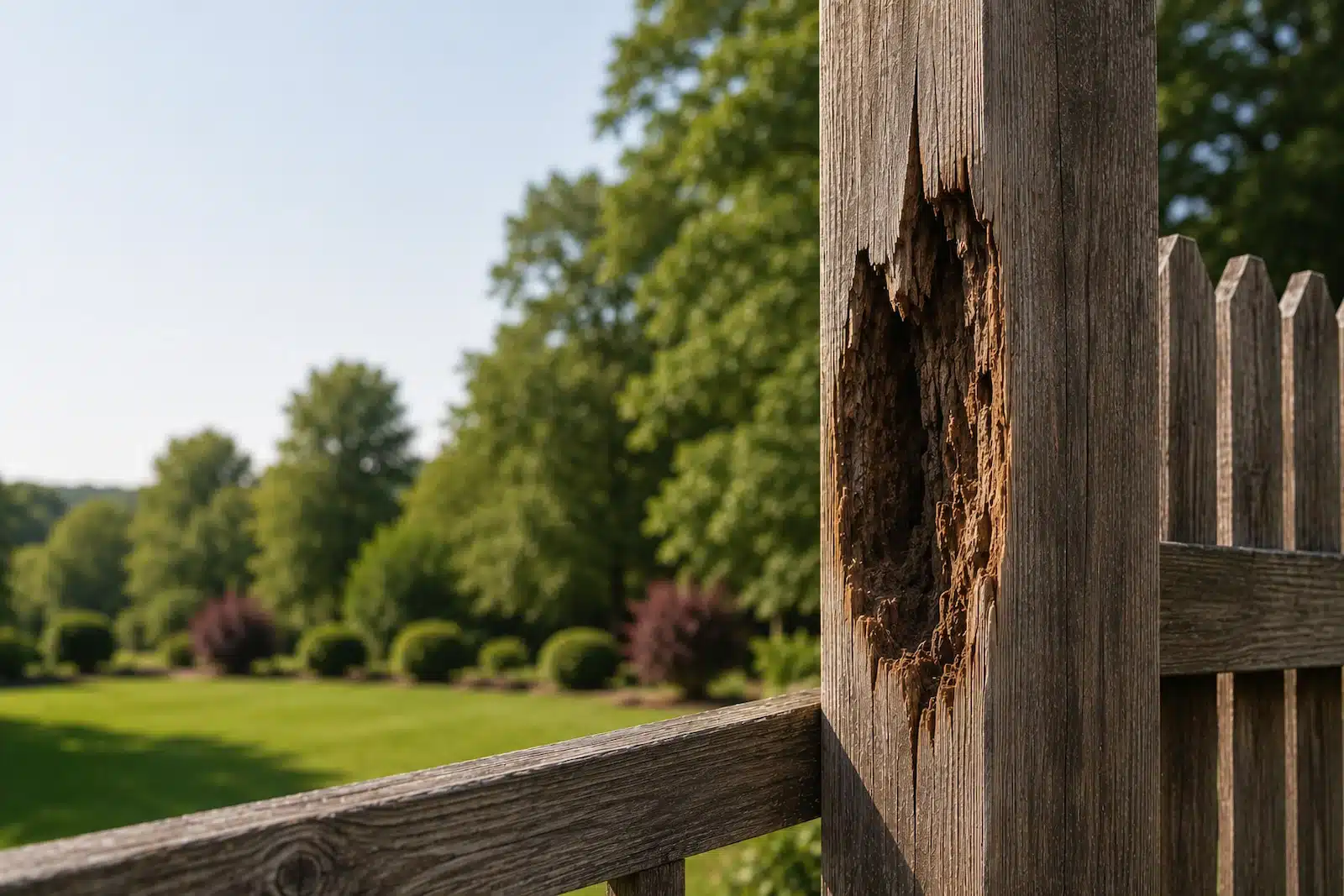
Rot at the base of a fence post can extend farther than it first appears. Inspect all sides, the ground line, nearby rails, and the way the post is supported before deciding how to proceed.
Probe the Wood Gently
Check whether the wood is firm or soft without damaging healthy material. Rot often extends beyond the visible opening.
Check the Ground Line
Pay close attention where the post meets soil, concrete, mulch, or standing water because this is a common decay zone.
Check Movement and Alignment
A post that leans, twists, or moves excessively may need reinforcement or replacement rather than a surface repair.
Learn how much rotten wood should be removed before rebuilding begins.
MAKE THE RIGHT DECISION
When Should a Rotted Fence Post Be Repaired or Replaced?
Repair works best for localized damage. Replacement is usually more appropriate when the post has lost major strength, moves at the base, or can no longer support the fence safely.
Repair May Be Practical When
The damaged area is limited, the post remains stable, firm wood surrounds the cavity, and the original profile can be rebuilt.
Replacement May Be Better When
Rot affects most of the post, the post moves in the ground, fasteners no longer hold, or the fence presents a safety concern.
Compare both options in Repair or Replace Rotten Wood?
PREPARATION MATTERS
Prepare the Fence Post Before Rebuilding
A lasting repair needs a clean, dry, and stable foundation. Do not place repair material over loose fibers, wet soil, dirt, failed coatings, or unstable wood.
Reduce the Moisture
Redirect sprinklers, improve drainage, remove trapped debris, and allow the repair area to dry.
Remove Unsound Wood
Remove soft, brittle, crumbling, and detached material while preserving firm wood that can support the repair.
Clean and Treat
Clean the cavity and follow the complete wood preparation process before rebuilding.
THE WRP REPAIR PROCESS
Rebuild the Damaged Fence Post in Three Stages
The complete process strengthens suitable remaining wood, replaces missing material, and restores the post profile before the surface is finished and protected.
Strengthen the Remaining Wood
Apply the appropriate WRP consolidant to suitable weakened fibers and allow it to cure according to current instructions.
Rebuild the Missing Area
Use WRP epoxy wood repair dough to restore the damaged section. Review the epoxy repair dough guide.
Restore the Post Profile
Match the original post shape while maintaining drainage and avoiding pockets where water can collect.
FINISH AND PROTECT
Finish the Repair and Help Prevent Future Fence Post Rot
After the repair has cured, refine the surface, restore drainage, and apply a compatible exterior coating system. Continue checking the area for soil contact and trapped moisture.
Refine the Surface
Sand and shape the repair as needed. WRP Topping Compound may help refine minor surface imperfections before finishing.
Apply the Finish
Prime and coat the repaired area with products suitable for exterior fence exposure and the surrounding finish.
Reduce Future Moisture
Keep soil and mulch away when possible, redirect irrigation, maintain drainage, and repair failed coatings promptly.
Learn when to use WRP Topping Compound and how to protect exposed wood with Board Defense .
COMMON QUESTIONS
Frequently Asked Questions About Rotted Fence Posts
These answers cover common fence post repair questions. Every project should still be evaluated based on the condition of the post, nearby rails, and ground support.
Can a rotted fence post be repaired without removing it?
Sometimes. Localized damage may be repaired in place when the post remains stable and enough firm wood surrounds the cavity.
When should a fence post be replaced instead?
Replacement is usually more appropriate when rot affects most of the post, the base moves, fasteners no longer hold, or the fence presents a safety concern.
Does all soft wood need to be removed?
Loose, soft, brittle, crumbling, and detached material should be removed. Preserve firm wood that can support the repair.
Can epoxy repair material be used over wet wood?
The moisture source should be corrected and the prepared wood should be dry enough for the selected materials to penetrate, bond, and cure properly.
Can the repaired post be sanded and painted?
Yes. After curing, the repair can be shaped and sanded before an appropriate exterior primer, stain, paint, or coating system is applied.
What if the post is loose in the ground?
A loose or leaning post may have failed below grade or lost support at the footing. That condition should be evaluated before any surface repair is attempted.
Which WRP kit should I use?
Kit size depends on the size, depth, and number of repairs. Review Choosing the Right WRP Repair Kit or contact WRP for product-selection help.
CONTINUE PLANNING YOUR REPAIR
Prepare for a Complete Fence Post Repair
Continue with the guides that explain how to remove damaged wood, prepare the repair area, and select the right WRP materials.
How Much Rotten Wood Should Be Removed?
Learn how to remove unsound material while preserving firm wood that can support the repair.
How to Prepare Wood for Repair
Follow the preparation steps that create a clean and stable foundation for the WRP repair system.
Choosing the Right WRP Repair Kit
Compare the available kit sizes based on the number, depth, and overall size of your repairs.