
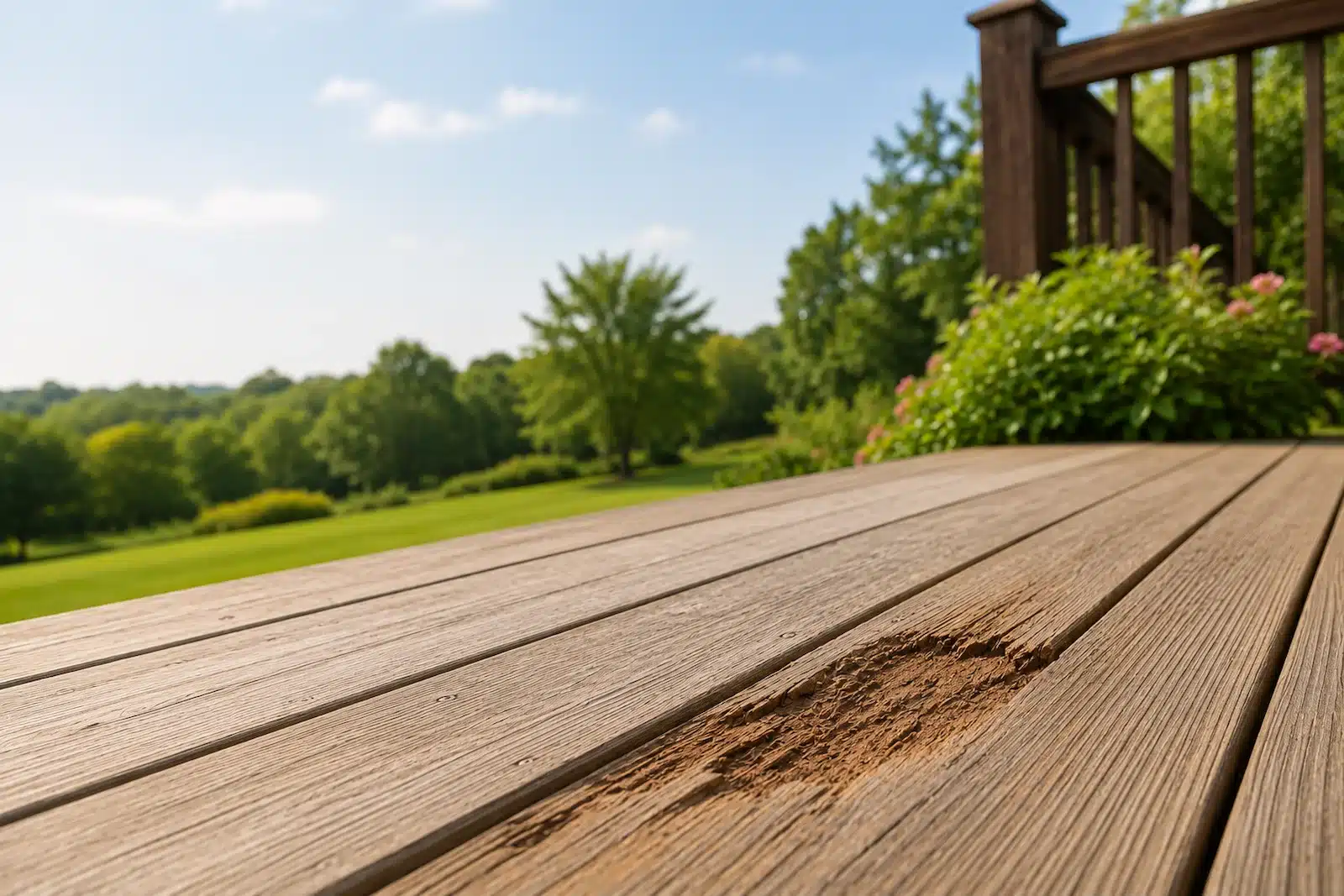
DECK WOOD REPAIR GUIDE
How to Repair Rotted Deck Boards
Learn how to repair rotted deck boards by inspecting the damage, deciding whether repair or replacement makes sense, removing unsound wood, rebuilding the damaged area, and protecting the finished repair.
THE SHORT ANSWER
How to Repair Rotted Deck Boards with Localized Damage
When learning how to repair rotted deck boards, start by confirming the damage is limited to one area, enough firm wood remains, and the board is still stable. The source of moisture must also be corrected before rebuilding.
The Damage Is Localized
Small areas around fasteners, board ends, checks, or surface pockets may be practical to restore without replacing the full board.
Firm Wood Still Remains
The repair needs solid surrounding wood that can support the rebuilt section after loose and crumbling material is removed.
The Moisture Source Can Be Corrected
Standing water, failed coatings, trapped debris, poor drainage, or leaking nearby components must be addressed first. For additional technical background on wood moisture and decay, review the USDA Forest Service Wood Handbook.
Begin by reviewing how to tell if wood is rotten and what causes wood rot.
INSPECT BEFORE REPAIRING
Inspect Rotted Deck Boards Before Repair
The visible opening may be smaller than the actual damaged area. Inspect the top, sides, underside, fastener locations, and nearby framing before deciding how to proceed.
Probe Gently
Use a small hand tool to check whether the wood is firm or soft. Do not force the tool through healthy material.
Inspect the Underside
Look below the board when possible. Damage that reaches through most of the thickness may make replacement the safer choice.
Check Nearby Framing
Confirm that joists, blocking, ledgers, posts, and connections are stable and free from serious deterioration.
For help deciding how much material to remove, read How Much Rotten Wood Should Be Removed?
MAKE THE RIGHT DECISION
When Should a Rotted Deck Board Be Repaired or Replaced?
Repair works best for localized damage. Replacement is usually more appropriate when deterioration affects most of the board, the board is unstable, or safety is uncertain.
Repair May Be Practical When
The damaged area is small, the board remains securely fastened, firm wood surrounds the cavity, and the original shape can be rebuilt.
Replacement May Be Better When
Rot runs through much of the board, several areas have failed, the board flexes excessively, or structural support is affected.
Compare the options in Repair or Replace Rotten Wood? If the condition involves structural framing or a fall hazard, obtain qualified professional guidance.
PREPARATION MATTERS
Prepare Rotted Deck Boards Before Rebuilding
A lasting repair depends on a clean, dry, and stable foundation. Do not place repair material over loose fibers, trapped moisture, dirt, failed coatings, or unstable wood.
Stop the Moisture
Correct drainage, remove trapped debris, repair nearby leaks, and allow the board to dry.
Remove Unsound Wood
Remove soft, brittle, crumbling, and detached material while preserving firm wood that can support the repair.
Clean and Treat
Clean the cavity and follow the complete wood preparation process before rebuilding.
THE WRP REPAIR PROCESS
How to Rebuild a Rotted Deck Board in Three Stages
The process for how to repair rotted deck boards strengthens suitable remaining wood, replaces missing material, and restores the board profile before the surface is finished and protected.
Strengthen the Remaining Wood
Apply the appropriate WRP consolidant to suitable weakened fibers and allow it to cure according to current instructions.
Rebuild the Missing Area
Use WRP epoxy wood repair dough to restore the damaged section. Learn more in the epoxy repair dough guide.
Shape the Board Profile
Match the original board edges, surface plane, and drainage path so water does not collect around the repair.
FINISH AND PROTECT
Finish and Protect Repaired Deck Boards
After you repair rotted deck boards, refine the surface, restore drainage, and apply a compatible exterior coating system. Continue checking the deck for trapped moisture and coating failure.
Refine the Surface
Sand and shape the repair as needed. WRP Topping Compound may help refine minor surface imperfections before finishing.
Apply the Finish
Prime and coat the repaired area with products suitable for exterior deck exposure and the surrounding finish.
Maintain the Deck
Keep gaps clear, maintain drainage, repair failed coatings, and address moisture problems before decay returns.
Learn when to use WRP Topping Compound and how to protect exposed wood with Board Defense .
COMMON QUESTIONS
Frequently Asked Questions About Rotted Deck Boards
These answers cover common deck board repair questions. Every project should still be evaluated based on the condition of the board and the supporting structure.
Can a rotted deck board be repaired without removing it?
Sometimes. Localized damage may be repaired in place when the board remains stable and enough firm wood surrounds the damaged area.
When should a deck board be replaced instead?
Replacement is usually more appropriate when rot affects most of the board, the board flexes or moves, or the supporting framing and connections are uncertain.
Does all soft wood need to be removed?
Loose, soft, brittle, crumbling, and detached material should be removed. Preserve firm wood that can support the repair.
Can epoxy repair material be used over wet wood?
The moisture source should be corrected and the prepared wood should be dry enough for the selected materials to penetrate, bond, and cure properly.
Can the repaired deck board be sanded and coated?
Yes. After curing, the repair can be shaped and sanded before an appropriate exterior primer, stain, paint, or coating system is applied.
Should I inspect the joists below the damaged board?
Yes. Damage in a deck board can be associated with moisture affecting nearby joists, blocking, fasteners, or connections.
Which WRP kit should I use?
Kit size depends on the size, depth, and number of repairs. Review Choosing the Right WRP Repair Kit or contact WRP for product-selection help.
CONTINUE PLANNING YOUR REPAIR
Prepare for a Complete Deck Board Repair
Continue with the guides that explain how to remove damaged wood, prepare the repair area, and select the right WRP materials.
How Much Rotten Wood Should Be Removed?
Learn how to remove unsound material while preserving firm wood that can support the repair.
How to Prepare Wood for Repair
Follow the preparation steps that create a clean and stable foundation for the WRP repair system.
Choosing the Right WRP Repair Kit
Compare the available kit sizes based on the number, depth, and overall size of your repairs.