
WRP PRODUCTS & MATERIALS
Epoxy Wood Repair Dough Guide
Learn what epoxy wood repair dough is, how the two parts are mixed, when it should be used, and how it rebuilds missing or deteriorated wood as part of the complete WRP restoration system.
UNDERSTANDING THE BASICS
What Is Epoxy Wood Repair Dough?
Epoxy wood repair dough is a two-part repair material used to rebuild missing, damaged, or deteriorated wood after the repair area has been properly prepared. Once Parts A and B are thoroughly mixed together, the dough becomes moldable, allowing it to be pressed firmly into the repair and shaped to match the original wood profile before curing into a strong, durable repair.
Two-Part Epoxy System
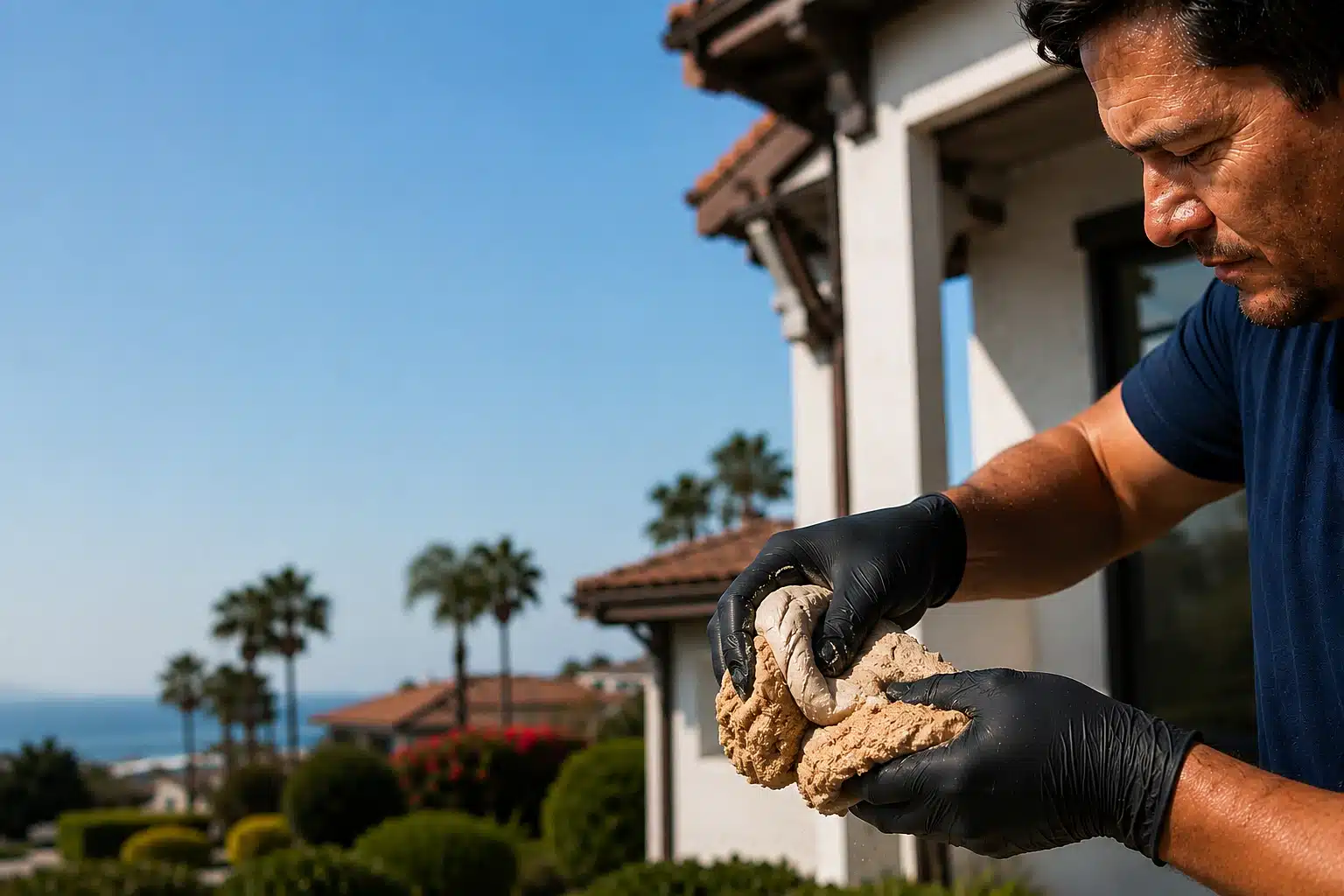
Equal portions of Part A and Part B are hand mixed until a consistent color is achieved, creating a workable repair dough ready for application.
Rebuilds Missing Wood
Epoxy repair dough is used to restore corners, beam ends, fascia, trim, window components, columns, and other areas where wood has been lost to deterioration.
Shapes Like Wood
Before curing, the dough can be pressed, sculpted, and shaped to recreate the original profile, making it ideal for detailed exterior wood repairs.
Before rebuilding damaged wood, learn Wood Consolidant Explained, review How to Prepare Wood for Repair, or see the complete WRP repair process to understand how each step works together.
HOW IT WORKS
How Epoxy Wood Repair Dough Works
Epoxy wood repair dough is designed to permanently rebuild missing wood after the repair area has been properly prepared and strengthened. Once Parts A and B are thoroughly mixed, the dough becomes moldable, allowing it to bond securely to the repair area while being shaped to match the original wood profile.
Mix Equal Parts
Remove equal amounts of Part A and Part B and knead them together until a completely uniform color is achieved with no streaks remaining.
Press Firmly Into the Repair
Force the mixed epoxy deep into the prepared repair cavity to eliminate air pockets and create maximum contact with the surrounding wood.
Shape the Repair
While still workable, form the epoxy to closely match the original wood profile. Slight overfilling allows for final shaping after curing if needed.
Allow It to Cure
After curing, the repaired area can be sanded, drilled, routed, primed, painted, or finished as part of the complete WRP repair system.
Strong Mechanical Bond
Properly mixed epoxy repair dough bonds securely to prepared, consolidated wood, creating a durable repair capable of handling years of exterior exposure.
Part of a Complete Repair System
Epoxy repair dough performs best when used with wood consolidant, followed by WRP Topping Compound to create a smooth, paint-ready finish.
Continue learning by reading Wood Consolidant Explained, How to Prepare Wood for Repair, or explore the complete WRP repair process to see how every product works together.
COMMON APPLICATIONS
Where Is Epoxy Wood Repair Dough Used?
Epoxy wood repair dough is used to rebuild missing wood after the damaged area has been properly prepared and strengthened. It can be shaped to recreate original wood profiles, making it ideal for many types of exterior wood repairs where replacement is unnecessary.
Fascia Boards
Restore deteriorated roof edges, rafter tails, and fascia boards without replacing long sections of otherwise sound wood.
Windows & Doors
Rebuild damaged window sills, jambs, trim, door frames, and decorative details while preserving the original woodwork.
Columns & Beam Ends
Restore damaged beam ends, structural trim, porch columns, pergolas, and exposed framing members after proper preparation.
Trim & Decorative Wood
Repair exterior trim, moldings, brackets, soffits, corbels, decorative millwork, and custom architectural details.
Ideal for Exterior Repairs
WRP epoxy repair dough is engineered for demanding exterior environments where permanent repairs are preferred over costly wood replacement.
Not for Loose, Unprepared Wood
Always remove unsound wood and properly prepare the repair area before rebuilding. Learn How to Prepare Wood for Repair and Wood Consolidant Explained before beginning your repair.
See real repairs in our Before & After Gallery, browse the complete WRP Repair Process, or explore WRP Products to find the right materials for your project.
KNOW WHEN TO REBUILD
When Should You Use Epoxy Wood Repair Dough?
Epoxy wood repair dough is used after loose, deteriorated wood has been removed and the remaining wood has been properly prepared. It is designed to replace missing wood, restore original profiles, and create a durable repair that can be finished like real wood.
Missing Wood
Use epoxy repair dough when portions of the original wood are missing and need to be permanently rebuilt rather than replaced.
Recreating Profiles
Restore corners, edges, trim details, decorative molding, and architectural features that require shaping before curing.
Deep Repairs
Ideal for rebuilding larger cavities and structural wood profiles after the repair area has been consolidated and stabilized.
Long-Term Repairs
When installed correctly, epoxy repair dough creates a durable repair that can be sanded, drilled, routed, primed, and painted.
When Not to Use It
Epoxy repair dough should not be applied over loose, wet, or contaminated wood. Proper preparation is essential for a successful repair.
Best Results
Follow the complete WRP process by preparing the wood, applying wood consolidant, rebuilding with epoxy repair dough, and finishing with WRP Topping Compound.
Learn How to Prepare Wood for Repair, explore Wood Consolidant Explained, follow the complete WRP Repair Process, or browse the WRP Product Line to choose the right materials for your repair.
FINISHING THE REPAIR
Can Epoxy Wood Repair Dough Be Sanded, Drilled, and Painted?
Yes. After the epoxy wood repair dough has fully cured, it can be shaped, sanded, drilled, routed, primed, and painted. These finishing characteristics allow the repaired area to blend with the surrounding wood while restoring both appearance and durability.
Sand to Shape
Once cured, the repair can be sanded to create smooth transitions and accurately match the surrounding wood profile.
Drill and Route
Properly cured repairs can be drilled or routed when required for hardware installation or profile restoration.
Refine the Surface
For an exceptionally smooth finish, apply WRP Topping Compound after shaping to fill minor imperfections before priming.
Prime and Paint
After final preparation, prime and paint the repaired area to match the surrounding finish and provide long-term weather protection.
Follow the Complete System
The best repairs begin with proper preparation, followed by wood consolidant, epoxy repair dough, surface refinement, and protective finishing.
Built for Long-Term Repairs
When installed correctly as part of the WRP repair system, epoxy wood repair dough provides a durable restoration for exterior wood components exposed to the elements.
Continue with When to Use WRP Topping Compound, review How WRP Works, browse the WRP Product Line, or return to the WRP Learning Center for more wood repair guides.
AVOID COMMON MISTAKES
Common Mistakes When Using Epoxy Wood Repair Dough
Epoxy wood repair dough is designed to create long-lasting repairs, but proper preparation and application are essential. Avoiding these common mistakes will help produce stronger, more professional results.
Incomplete Mixing
Part A and Part B must be mixed thoroughly until the color is completely uniform. Streaks indicate the epoxy has not been fully blended and may not cure correctly.
Skipping Preparation
Epoxy repair dough should never be applied over loose, deteriorated wood. Follow How to Prepare Wood for Repair before rebuilding.
Ignoring Moisture
Always correct the source of moisture before repairing wood. Trapping active moisture can shorten the life of any repair.
Rushing the Cure
Allow the epoxy to fully cure before sanding, routing, priming, or painting. Premature finishing can damage the repair.
Don't Skip Wood Consolidant
When appropriate, strengthen remaining wood with wood consolidant before rebuilding with epoxy repair dough.
Follow the Complete WRP System
The strongest repairs result from following the complete WRP process from preparation through final finishing—not treating epoxy repair dough as a standalone product.
Learn more about Wood Consolidant Explained, review How to Prepare Wood for Repair, see How WRP Works, browse the WRP Product Line, or return to the WRP Learning Center.
COMPLETE WRP REPAIR PROCESS
The Complete WRP Wood Repair System
Long-lasting wood repairs depend on using the complete repair system in the proper sequence. Each product performs a specific function to strengthen, rebuild, reinforce, and protect the repaired wood.
1. Prepare the Wood
Remove deteriorated wood, clean the repair area, treat remaining wood where appropriate, and prepare a solid foundation for rebuilding.
2. Restore the Damage
Use WRP liquid products, epoxy repair dough, reinforcement, and topping compound as needed to rebuild the damaged area.
3. Protect the Repair
Prime, paint, and protect exposed wood so the completed repair remains durable for years to come.
FREQUENTLY ASKED QUESTIONS
Frequently Asked Questions About Epoxy Wood Repair Dough
These are some of the most common questions homeowners, contractors, and property managers ask about epoxy wood repair dough. Learn more throughout the WRP Learning Center or review How WRP Works for the complete repair process.
What is epoxy wood repair dough used for?
Epoxy wood repair dough is used to rebuild missing or damaged wood after loose material has been removed and the remaining wood has been properly prepared. It restores corners, beam ends, trim, fascia boards, columns, window components, and many other exterior wood profiles.
Does epoxy wood repair dough replace wood filler?
Epoxy repair dough is designed for rebuilding missing wood, while products such as WRP Topping Compound are used to refine the surface before priming and painting.
Can epoxy wood repair dough be sanded?
Yes. After the epoxy has completely cured, it can be sanded, shaped, drilled, routed, primed, and painted to match the surrounding wood.
Should wood consolidant be used first?
When appropriate, remaining weakened wood should first be treated with wood consolidant before rebuilding the missing section with epoxy repair dough.
Can epoxy wood repair dough be used outdoors?
Yes. WRP epoxy wood repair dough is designed for demanding exterior wood repairs when installed as part of the complete WRP repair system and properly protected with primer and paint.
How long does epoxy wood repair dough last?
When the moisture source has been corrected, the repair area is properly prepared, and the complete WRP system is followed, epoxy repairs are designed to provide long-lasting, permanent wood restoration.
Where can I learn the complete repair process?
Visit How WRP Works for the complete step-by-step repair process, or browse the WRP Learning Center for additional repair guides and product education.
CONTINUE LEARNING
Continue With the Complete Wood Repair Process
Epoxy wood repair dough rebuilds missing wood, but a durable restoration also depends on proper preparation, consolidation, surface refinement, and final protection. Continue with the next guide or explore the complete WRP repair system.
Understand Wood Consolidant
Learn how wood consolidant strengthens deteriorated fibers before the missing area is rebuilt with epoxy repair dough.
See the Complete WRP Process
Review every stage from preparation and consolidation through rebuilding, shaping, priming, and painting.
Refine the Finished Repair
Learn when WRP Topping Compound should be used to smooth minor imperfections before priming and painting.
Continue reading Can Rotten Wood Be Repaired?, Repair or Replace Rotten Wood?, How Much Rotten Wood Should Be Removed?, and How to Prepare Wood for Repair. For project or product questions, contact WRP.