
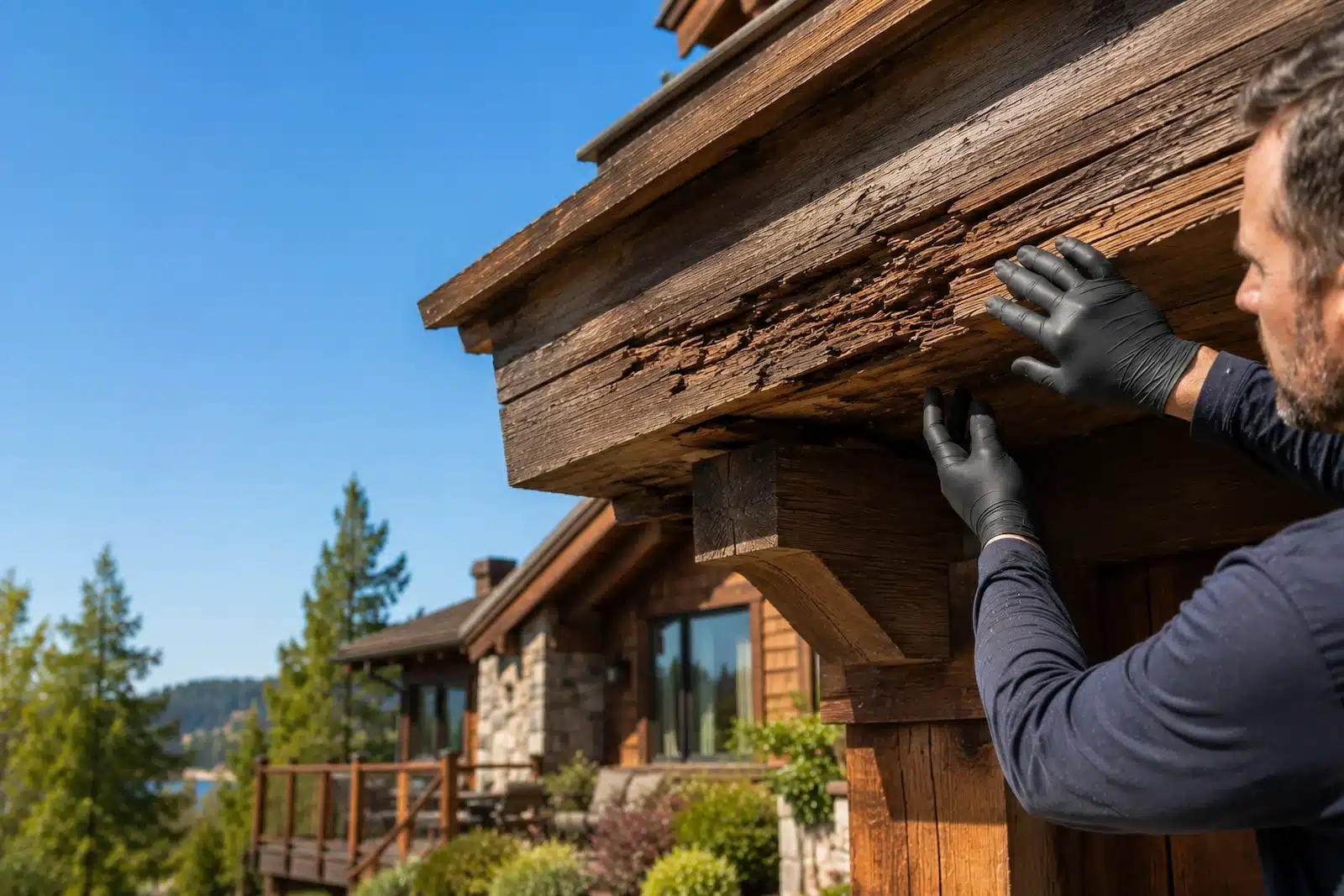
WOOD ROT CAUSES AND MOISTURE
What Causes Wood Rot?
Wood rot develops when decay fungi have suitable conditions and wood remains damp long enough for those fungi to break down the material. The practical first step is to find out why the wood is staying wet and correct that condition.
THE SHORT ANSWER
Persistent Moisture Creates the Conditions for Decay
A single wetting event does not explain every case of rot. The larger risk is wood that stays damp or is wetted repeatedly without enough opportunity to dry. Correcting the leak, drainage problem, open joint, coating failure, or other moisture source comes before repair planning.
Start with the water path
Look beyond the visibly damaged area. Water can enter at one location, travel through a joint or assembly, and collect somewhere else.
CONDITIONS FOR DECAY
What Wood-Decay Fungi Need
Wood-decay fungi become active only when environmental conditions support them. Moisture is the condition property owners can most directly investigate and manage.
Wood That Remains Damp
Repeated or prolonged moisture gives decay fungi more opportunity to become active than wood that dries promptly.
Conditions That Limit Drying
Closed joints, concealed cavities, poor airflow, absorbent debris, and surfaces that hold water can keep wood damp after the visible surface looks dry.
Suitable Temperature and Oxygen
Decay also depends on surrounding environmental conditions. Moisture management remains the practical first control because fungi cannot continue the same activity when wood is kept dry.
For additional background, review the USDA Forest Products Laboratory reference retained from the original article.
TRACE THE MOISTURE
Common Moisture Sources
The visible deterioration may be downstream from the actual water-entry point. Inspect the complete assembly and the paths water can follow.
Roof, Gutter, and Flashing Leaks
Overflowing gutters, damaged flashing, roof-edge leaks, and poorly directed runoff can repeatedly wet fascia, eaves, rafter tails, siding, and nearby trim.
Failed Paint, Sealant, and Joints
Open end grain, cracked coatings, failed sealant, and separated joints can admit water and slow drying at windows, doors, trim, railings, and built-up assemblies.
Drainage and Ground Contact
Water that pools near posts, columns, stairs, siding, or framing can keep lower wood surfaces damp. Soil contact and splashback can add repeated exposure.
Repeated Wetting and Trapped Moisture
Sprinklers, condensation, horizontal ledges, tight joints, and covered cavities can wet wood again before the previous moisture has dispersed.
COMMON STARTING POINTS
Where Wood Rot Commonly Begins
Rot often begins where water enters easily, remains against end grain or joints, or cannot dry readily. These locations deserve closer moisture-source inspection.
Roof Edges and Exterior Trim
Fascia, soffits, eaves, rafter tails, window sills, and door trim can be exposed through failed coatings, joints, flashing, or runoff control.
Bases, Connections, and End Grain
Post and column bases, railing connections, fastener locations, and exposed end grain can retain water or draw it into connected wood.
Horizontal and Concealed Areas
Decks, beam tops, pergola joints, ledges, and enclosed cavities can collect water while hiding the extent or source of dampness.
WETTING IS NOT THE WHOLE STORY
Does Wet Wood Always Rot?
No. Wood can become wet and then dry without necessarily developing decay. Risk increases when moisture persists, wetting repeats, and the assembly limits drying. Wood species, construction details, exposure, coatings, and previous damage can also affect what happens next.
Avoid a false sense of certainty
A dry-looking surface does not prove concealed wood is dry, and visible dampness alone does not establish the extent of decay. Investigate the cause and inspect the connected wood before choosing a repair response.
KNOW WHEN TO INSPECT FURTHER
Warning Signs That Need Further Inspection
Warning signs can identify where to look, but they do not establish the complete depth, boundary, or repairability of the damage.
Surface and Coating Changes
Peeling or bubbling paint, persistent staining, open joints, cracking, or repeated dampness can point to an unresolved water path.
Changes in the Wood
Soft, crumbly, separated, or misshapen wood needs closer inspection beyond the most visible surface.
Movement or Concealed Clues
Loose connections, movement, interior staining, or musty conditions can indicate a broader assembly or hidden-moisture issue.
MOISTURE MANAGEMENT
How to Reduce the Risk of Wood Rot
Maintenance cannot guarantee prevention, but it can reduce repeated moisture exposure and make developing problems easier to find.
Correct Leaks and Drainage Problems
Repair failed flashing, roof or gutter leaks, poor runoff paths, plumbing leaks, and other active sources appropriate to the assembly.
Maintain Coatings, Sealant, and Joints
Address exposed end grain, opened joints, failed sealant, and coating defects before repeated weather exposure continues.
Limit Water Collection and Contact
Keep drainage paths open and correct conditions that allow water, damp debris, or wet soil to remain against vulnerable wood.
Inspect High-Risk Areas Regularly
Recheck roof edges, sill and trim joints, post bases, rail connections, deck details, and previously repaired moisture paths.
NEXT STEPS
What to Do When You Find Suspected Rot
Move from cause to diagnosis, then to scope and repair planning. Do not begin with kit size or product selection.
COMMON QUESTIONS
Wood Rot Questions
These answers keep moisture causes separate from detailed diagnosis and repair planning.
Does wet wood always rot?
No. Risk depends on whether the wood stays damp or is wetted repeatedly under conditions that support decay. Prompt drying can reduce risk, while trapped or recurring moisture deserves investigation.
What conditions cause wood rot?
Wood rot develops when decay fungi have suitable environmental conditions and wood remains damp long enough for fungal activity. Moisture is the practical condition to identify and correct first.
Can painted wood still rot?
Yes. Paint does not stop water entering through open joints, cracks, failed coatings, exposed end grain, or the back side of an assembly. A coating can also hide deterioration that began elsewhere.
Where does wood rot commonly start?
Common starting points include end grain, joints, post bases, sill corners, roof edges, horizontal surfaces, fastener locations, and concealed areas where water enters or drying is limited.
Can wood rot spread?
Deterioration can continue into nearby wood when the conditions supporting fungal activity remain. The practical response is to correct moisture and inspect the connected assembly rather than assume the visible boundary is complete.
What should I do after finding suspected rot?
Identify the moisture source, inspect the extent of the condition, determine whether repair or replacement is appropriate, and choose preparation and repair materials only after the scope is understood.