
WOOD ROT BASICS
Dry Rot vs. Wet Rot
Learn the difference between dry rot and wet rot, how to recognize the warning signs of each, and why identifying the type of wood decay is the first step toward choosing the correct repair method.
UNDERSTANDING THE DIFFERENCE
What Is the Difference Between Dry Rot and Wet Rot?
Although both types of wood rot are caused by fungi, they develop under different moisture conditions and often look very different. Understanding these differences can help you identify the problem earlier and choose the appropriate repair approach.
Dry Rot
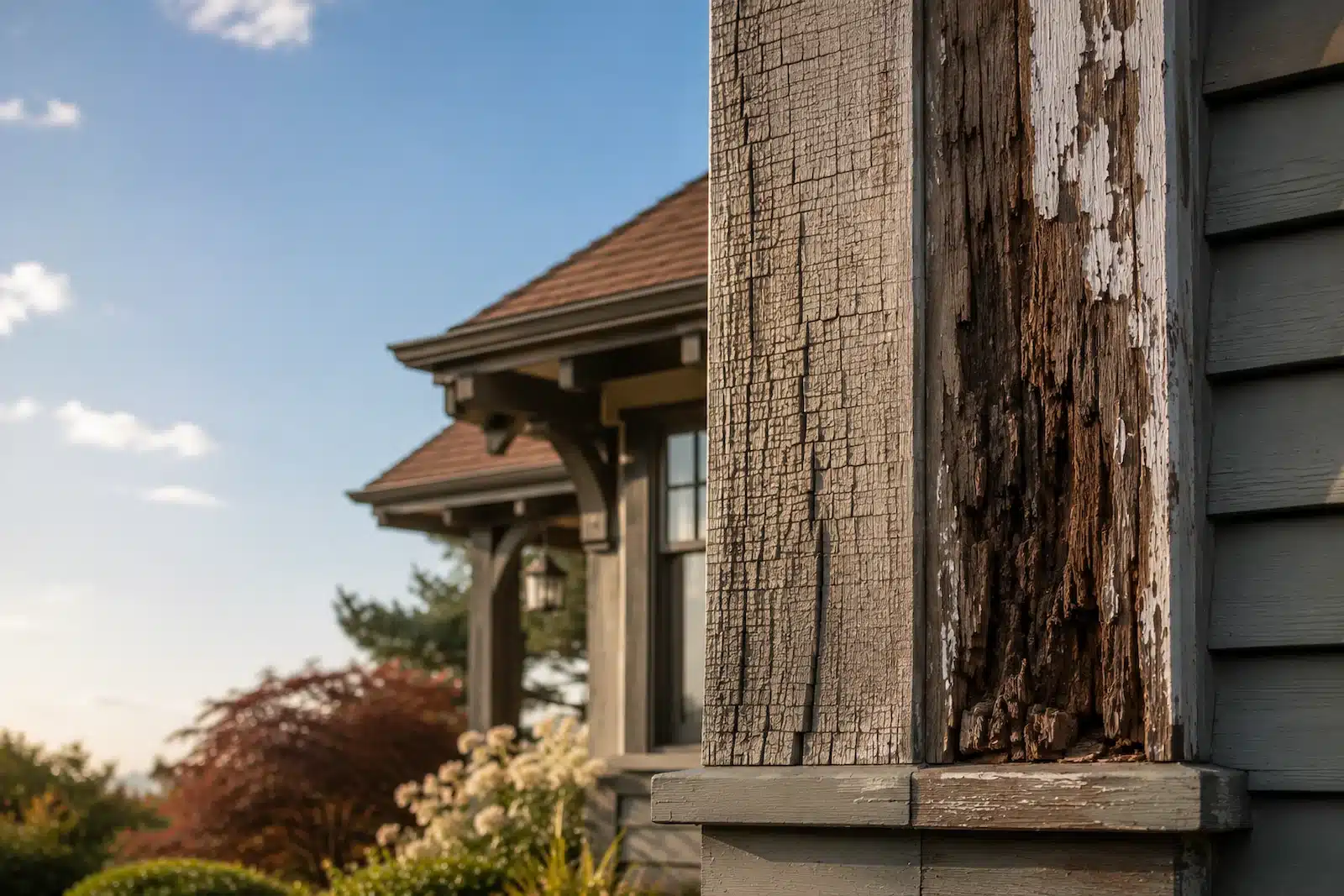
Dry rot typically produces brittle, cracked wood with deep checking and cubical cracking. The wood often appears dry because the moisture that caused the decay may no longer be present. Even though the surface looks dry, the damage occurred after prolonged moisture exposure.
Wet Rot
Wet rot develops when wood remains damp for long periods. The wood usually becomes darker, softer, and easier to compress. It often occurs around leaks, failed caulking, overflowing gutters, or other areas where moisture is trapped.
Learn what causes wood rot or return to the WRP Learning Center to explore more wood restoration articles.
UNDERSTANDING THE CAUSE
What Causes Dry Rot and Wet Rot?
Despite their names, both dry rot and wet rot begin because wood remains damp long enough for decay fungi to grow. The difference is not whether water was present, but how the fungi affect the wood and how the damage appears over time.
Moisture Starts the Process
Wood does not rot simply because it gets wet once. Rot begins when moisture remains trapped for an extended period, creating conditions that allow decay fungi to grow.
Different Types of Fungi
Dry rot and wet rot are caused by different fungi. Each breaks down the wood fibers differently, producing unique textures, colors, and patterns of deterioration.
Stopping the Moisture Is Critical
Regardless of the type of rot, repairing the wood without eliminating the moisture source will usually allow decay to continue and shorten the life of the repair.
Learn more about what causes wood rot or discover how to identify rotten wood before planning a repair.
VISUAL DIFFERENCES
How Dry Rot and Wet Rot Look Different
The appearance of the wood can provide useful clues, but visual inspection alone may not identify the exact fungus. Focus on the wood’s color, texture, moisture level, and strength.
Common Signs of Dry Rot
Dry-rotted wood may appear light brown, tan, or gray. It can become brittle, shrink, crack into block-like sections, and crumble when pressed or disturbed.
Common Signs of Wet Rot
Wet-rotted wood often appears darker and may feel soft, damp, spongy, or stringy. Paint may peel, joints may open, and the wood may compress under light pressure.
Appearance is only one part of the inspection. Learn how to test suspicious wood, review what causes wood rot, or return to the WRP Learning Center.
COMMON LOCATIONS
Where Dry Rot and Wet Rot Commonly Appear
Both types of decay can affect exterior wood, but the location and moisture conditions often provide clues about how the deterioration developed.
Roof Edges and Fascia
Leaking gutters, failed roofing, and exposed end grain can cause repeated wetting along fascia boards, rafter tails, and roof trim.
Windows and Exterior Trim
Failed caulk, peeling paint, and flat window sills can trap moisture around lower trim, corners, and joints.
Posts and Columns
Column bases and posts may absorb moisture from concrete, soil, irrigation, or standing water near the lower edge.
Decks and Stairs
Horizontal surfaces, fastener holes, railing posts, stair stringers, and board joints commonly hold water and dry slowly.
Beam Ends and Timber Joints
Exposed end grain, open cracks, connections, and flat upper surfaces can allow water to enter large wood members.
Doors, Siding, and Garage Trim
Splashback, failed coatings, and open joints often affect lower door trim, siding edges, garage surrounds, and decorative moldings.
Inspect these areas regularly, especially after leaks or severe weather. Browse real WRP repair examples or learn how to identify rotten wood.
REPAIR OR REPLACE?
Can Dry Rot and Wet Rot Be Repaired?
In many cases, localized damage can be restored. The decision depends on how much sound wood remains, whether the moisture source can be corrected, and whether the component can safely support a durable repair.
Localized Damage May Be Repairable
Small or moderate areas surrounded by firm wood can often be cleaned, strengthened, rebuilt, shaped, and refinished.
The Moisture Source Must Be Fixed
Leaks, failed flashing, poor drainage, and trapped moisture must be corrected before either type of decay is repaired.
Severe Damage May Require Replacement
Replacement or structural reinforcement may be necessary when most of the wood has lost strength or the remaining material cannot support a safe repair.
A proper restoration removes loose deterioration rather than covering it. Review how the WRP repair process works, browse completed wood restorations, or contact WRP for product guidance.
PREVENT FUTURE DECAY
How to Help Prevent Dry Rot and Wet Rot
Preventing either type of wood decay starts with controlling moisture. Wood should be protected from repeated wetting and allowed to dry when exposure occurs.
Maintain Gutters and Drainage
Keep gutters, downspouts, drains, and roof edges clear so water moves away from exterior wood.
Maintain Paint and Coatings
Repair peeling paint, exposed end grain, and damaged coatings before water enters the wood.
Seal Joints and Openings
Inspect caulk, flashing, penetrations, and trim joints. Replace failed sealants before water becomes trapped.
Improve Airflow
Allow enclosed, shaded, or covered wood to dry by improving ventilation and removing materials that trap moisture.
Avoid Wet Ground Contact
Keep wood away from soil, mulch, irrigation, wet masonry, and standing water whenever possible.
Inspect High-Risk Areas
Check fascia, posts, sills, stairs, beams, and exposed joints regularly and after leaks or severe weather.
Prevention cannot restore damaged fibers, but it can reduce future deterioration. Learn what causes wood rot or browse WRP repair products.
NEXT STEPS
What to Do When You Find Dry Rot or Wet Rot
The repair sequence is similar for both types of deterioration: stop the moisture, remove loose decay, strengthen the remaining wood, and rebuild the damaged area.
Correct the Moisture Source
Repair leaks, improve drainage, replace failed caulk, and make sure the area can dry.
Remove Loose Deterioration
Remove wood that is soft, brittle, crumbling, detached, or unable to support a durable repair.
Strengthen and Rebuild
Consolidate the remaining wood, rebuild missing areas, shape the profile, and apply the correct finish system.
Review real before-and-after repairs or return to the WRP Learning Center for more wood restoration guidance.
COMMON QUESTIONS
Frequently Asked Questions About Dry Rot and Wet Rot
These answers explain the basic differences. Learn what causes wood rot or review how to inspect damaged wood.
Is dry rot actually dry?
No. Dry rot still begins because wood remained damp long enough for decay fungi to grow. The wood may appear dry and brittle after the moisture source changes or the fibers have deteriorated.
What does wet rot feel like?
Wet-rotted wood may feel soft, spongy, damp, or stringy. It may compress under gentle pressure and often appears darker than nearby sound wood.
Which type of wood rot is worse?
Either type can cause serious damage if left untreated. Severity depends more on how far the decay has spread and how much strength the wood has lost.
Can dry rot spread without water?
Active fungal decay requires moisture. However, damage may appear to extend beyond the most visibly wet area because moisture can travel through joints, cavities, or connected materials.
Can dry rot and wet rot both be repaired?
Many localized areas can be repaired when enough sound wood remains and the moisture source can be corrected. Review real WRP repair examples and the complete repair process.
Should I paint over dry or wet rot?
No. Paint does not remove decay or restore weakened fibers. Loose deterioration must be removed and the remaining wood properly prepared before refinishing.
How do I know which WRP products I need?
Product selection depends on the size, depth, and location of the damage. Browse WRP wood repair products or contact WRP for help choosing a repair kit.
CONTINUE LEARNING
Take the Next Step With Your Wood Repair
Now that you understand the difference between dry rot and wet rot, learn how to identify damage, understand its cause, and choose the correct restoration process.
Understand What Causes Wood Rot
Learn how moisture, failed coatings, poor drainage, and trapped water create the conditions for decay.
Learn How to Identify Rotten Wood
Review the visual and physical warning signs and learn how to gently test suspicious areas.
Learn the Repair Process
See how WRP prepares, strengthens, rebuilds, shapes, and finishes deteriorated wood.